Criteria Needed for Enterprises Participating in Waste Treatment
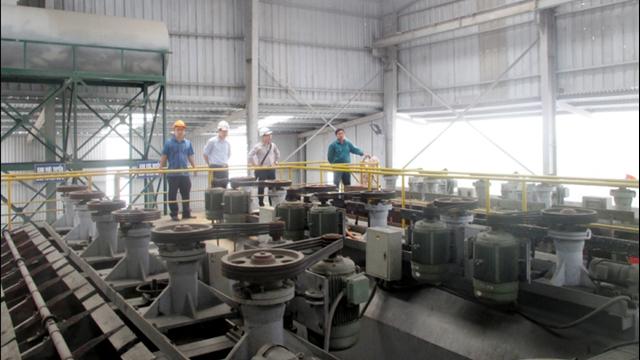
VIBM proposes that the Ministry of Construction develop criteria for enterprises participating in waste treatment
Finalising and transferring technology
“The programme is built on the principle that, through various options, it must deal with large quantities of waste, in line with Decision 1696/QD-TTg dated 23 September 2014 of the Prime Minister on solutions for treating ash, slag and gypsum from thermal power plants and chemical fertiliser plants. Therefore, building materials that use only a small amount of ash and slag to improve material properties will not fall within the scope of this programme,” said Mr. Luong Duc Long, Director of VIBM.
According to a preliminary assessment by VIBM experts, the amount of waste being treated is insignificant compared with the amount generated, especially for residues from chemical fertiliser plants.
Based on the technical characteristics of the waste (chemical composition, mineralogical composition, physical state, moisture and toxicity), VIBM experts will propose treatment and reuse options.
VIBM will also survey the technologies and equipment currently used to treat ash, slag and gypsum at operating thermal power and chemical fertiliser plants.
Regarding research on using waste from thermal power and chemical fertiliser plants as building materials, VIBM and the construction sector in general have carried out many feasibility studies, which now only need to be put into production. However, in this programme VIBM proposes 2 new studies capable of consuming large amounts of waste from thermal power, fertiliser and chemical plants: research on using bottom ash and fly ash from thermal power plants to make self-flowing materials for monolithic integration of concrete structures with the ground, and research on using waste from chemical fertiliser plants and fly ash from thermal power plants as materials for soft ground stabilisation.
In particular, in this programme VIBM will finalise and transfer technologies for using thermal power ash and slag and recycled gypsum to produce building materials. Eight technology lines are expected to be transferred and demonstrated. Among them, the line producing mineral admixtures for cement, which has been studied extensively, will now be put into production for PBC cement, low-heat cement and sulphate-resistant blended cement. VIBM will provide specific production plans, such as at which stage of the line fly ash should be added, along with pilot projects and descriptive documents as a basis for training when production is scaled up.
In addition, VIBM proposes other lines using ash, slag and gypsum: replacing clay in cement clinker production, replacing clay in fired brick production, producing unfired bricks (standardised into models), road construction (using fly ash for road base layers), fill materials, soft ground stabilisation materials and concrete (new research).
For replacing clay in cement clinker production, VIBM already has a research project and will finalise the technology and carry out a pilot transfer to a cement plant. For replacing clay in fired brick production, VIBM believes that up to 50–60% of the clay can be replaced.
Proposal to develop criteria for waste-treating enterprises
Regarding standards, technical regulations and technical guidelines, VIBM plans to develop 4 documents under the programme: a standard for recycled gypsum as an admixture for cement; a standard for recycled gypsum as a raw material for gypsum boards; guidelines for treating and using ash and slag from thermal power plants as fill materials; and guidelines for treating and using phosphogypsum from chemical fertiliser plants as fill materials.
VIBM’s programme will also address environmental issues before and after waste treatment. VIBM will carry out 4 assessments: the current environmental status of waste dumps, the environmental impact of recycling technologies, the environmental impact of using recycled materials as building materials, and the environmental impact of using building materials containing recycled materials.
Based on these studies and assessments and the proposed comprehensive solutions, to ensure good implementation of Decision 1696 and the maximum and best possible treatment of waste from thermal power and chemical fertiliser plants, VIBM proposes that the Ministry of Construction develop specific criteria for enterprises participating in treating such waste. This is a special type of waste which, if not used and treated properly, will have other impacts on human health and the surrounding environment.
VIBM’s scheme will also provide specific education and training programmes to replicate models that have proven effective in practice.
With the determined efforts of units under the Ministry of Construction and VIBM, it is hoped that waste from thermal power and chemical fertiliser plants will be treated optimally and to the greatest extent, in line with Decision 1696 and demonstrating the social responsibility of the construction sector.
According to Thanh Nga / Construction Newspaper