Daylight Reflectance Calculator
How to use the reflectance calculator
Simply pick a colour with the colour picker, enter colour coordinates (RGB, HSL or HEX), or select a material from the built-in database. The total daylight reflectance (total daylight reflectance) is displayed instantly.
Daylight reflectance is an important property of material surfaces that affects human visual comfort. Several terms are used, but they are physically equivalent: all express the ratio or percentage of visible light striking a surface that is reflected from it. These terms include Daylight Reflectance (Daylight Reflectance), Visible Light Reflectance (Visible Light Reflectance – VLR), Luminous Reflectance (Luminous Reflectance), and Light Reflectance Value (Light Reflectance Value – LRV).
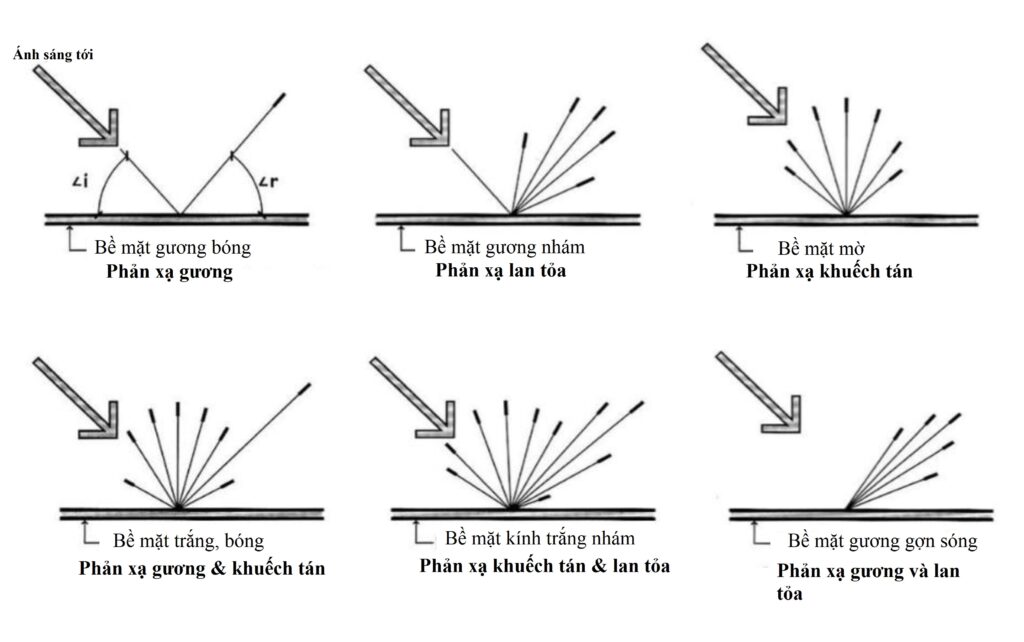
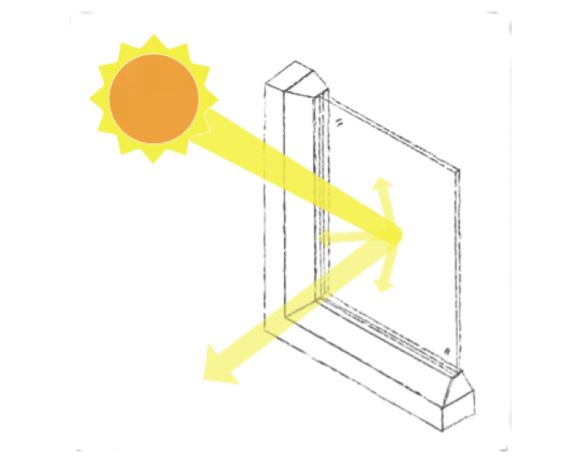
As illustrated above, light reflected by a surface has two components:
- Specular reflection: mirror-like reflection in a single direction, opposite to the incident light
- Diffuse reflection: the reflected light is scattered in all directions
- Total reflection : the sum of specular and diffuse reflection
Because diffuse reflection is scattered in all directions, an observer at any particular position sees only a small amount of reflected daylight. In other words, diffuse reflection generally does not cause glare. Specular reflection, on the other hand, travels in a specific direction, so glare occurs when the observer is in that direction. In other words, specular reflection is what generally causes glare.
1. Daylight reflectance and façade glare
In recent years, glass walls such as curtain walls and skylights have become increasingly popular. Glass not only improves a building’s appearance but also increases natural light indoors. However, light reflected from glass can sometimes create safety hazards or negatively affect the surroundings. These problems are often hard to foresee at the design stage and sometimes only become apparent after the building is completed.
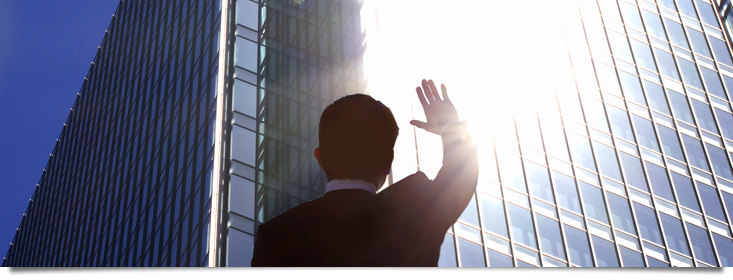
Reflected glare occurs when sunlight is reflected from a building surface into the field of view of nearby observers, causing discomfort and/or reduced visibility, which can lead to safety risks or loss of amenity. Reflected glare is particularly common for buildings taller than four storeys. Surfaces with high daylight reflectance, such as white coatings or reflective glass on building façades, reflect large amounts of light into the surroundings. These surfaces act like flashlights, causing uncomfortable glare for people around the building who are exposed to it every day. In some countries, materials with high daylight reflectance are prohibited on building façades to minimise glare impacts on the surroundings. In Singapore, for example, the daylight reflectance of external glass must not exceed 20%, while non-glass materials must be below 10%. Coatings such as emulsion paint on plaster or concrete on building façades must also not exceed the 10% threshold.
Reflected glare risk factors
Sensitive locations
The risk of reflected glare is higher for developments in dense urban environments with many residential and/or commercial buildings, or for projects highly visible from key viewpoints such as railway corridors, major roads, airports or parks. Buildings in non-urban areas can also cause reflected glare when exposed to light, especially if their surfaces are highly reflective.
Design factors
A range of design factors can increase the level and type of reflected glare risk, including building height and exposure, architectural form and design, and façade orientation and concavity. The examples below illustrate these factors.
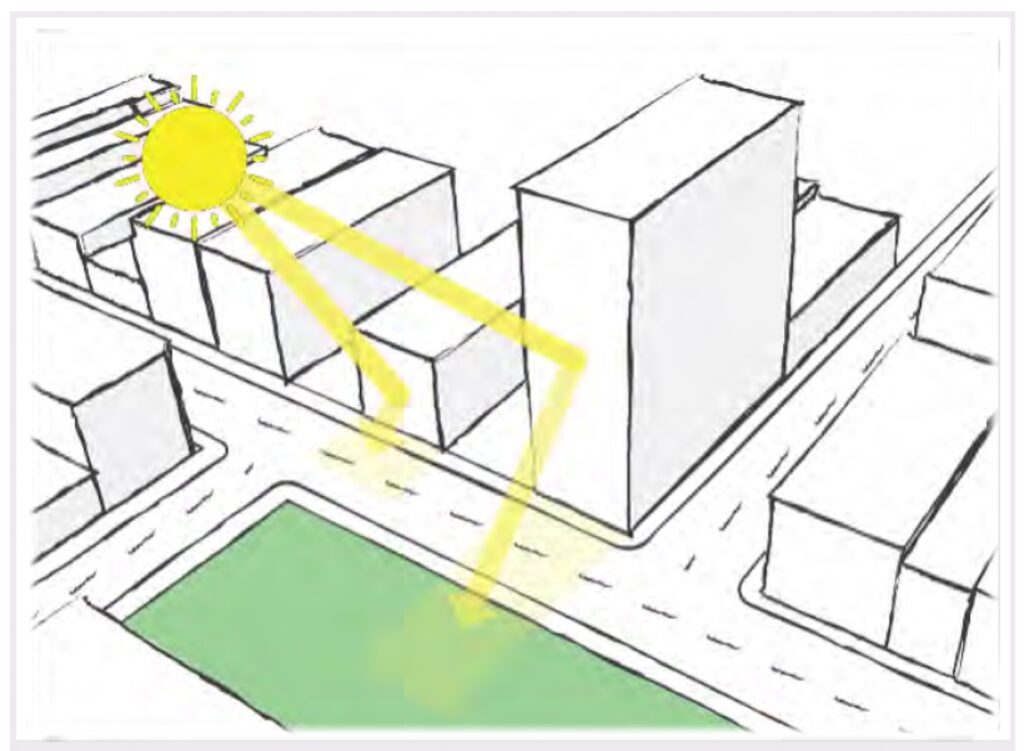
The risk of reflected glare is greater for buildings taller than 4 storeys and is usually associated with mid- and high-rise buildings.
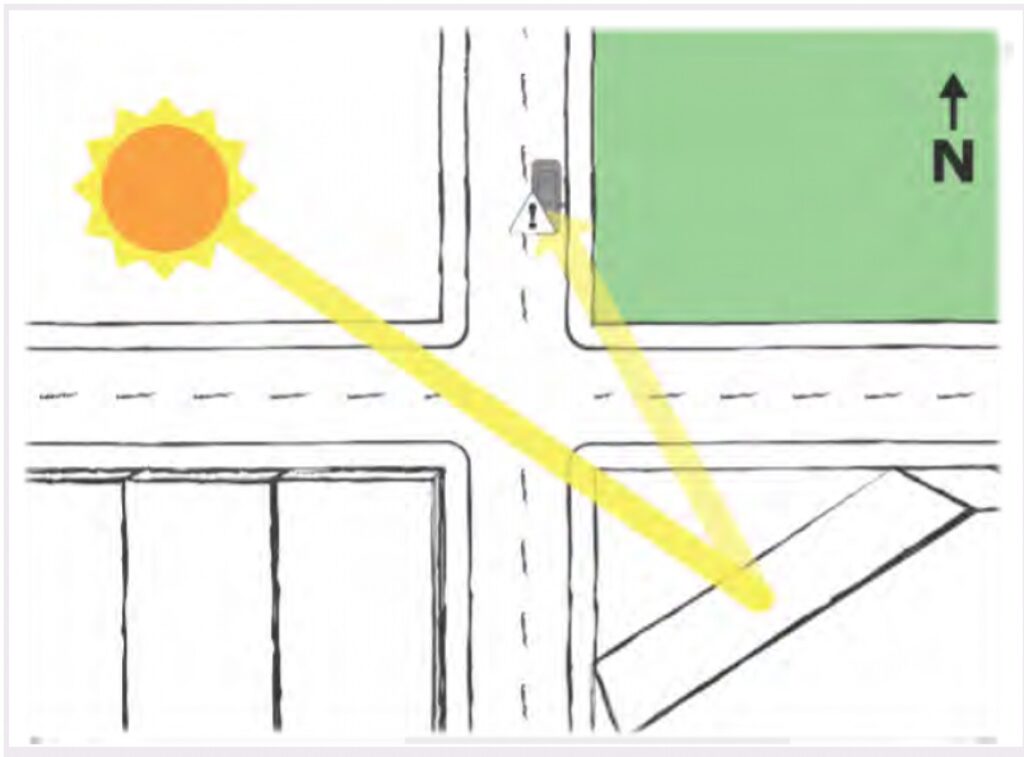
The risk of reflected glare is higher for elevations facing the cardinal directions (north, south, east or west).
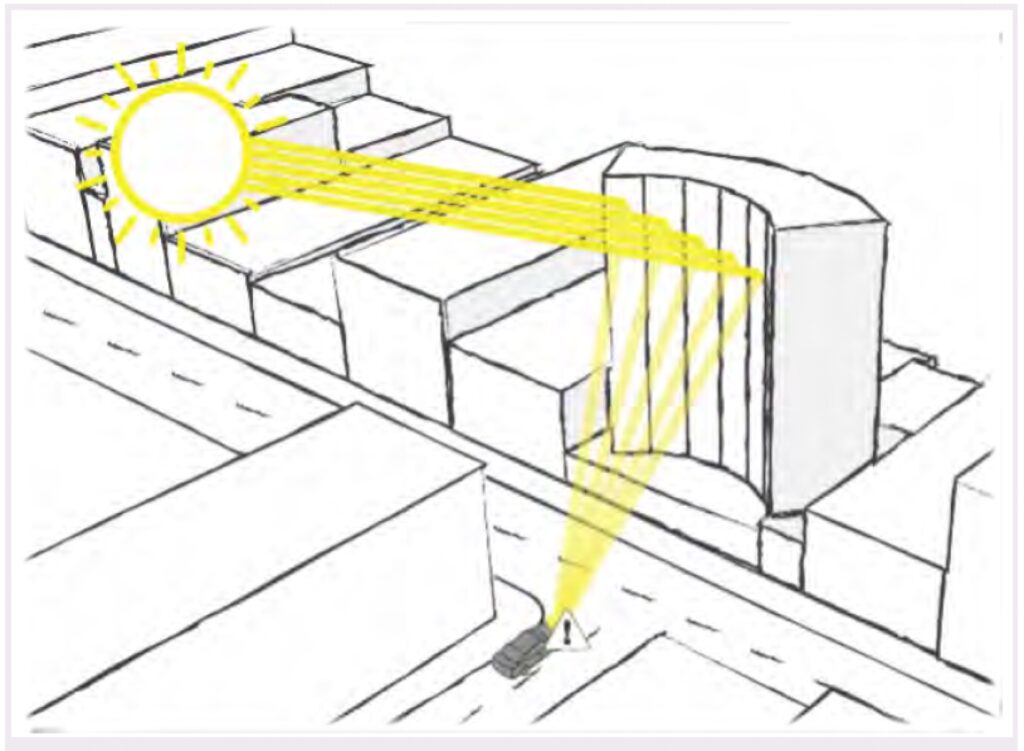
The risk of reflected glare is higher for concave or multi-faceted façades.
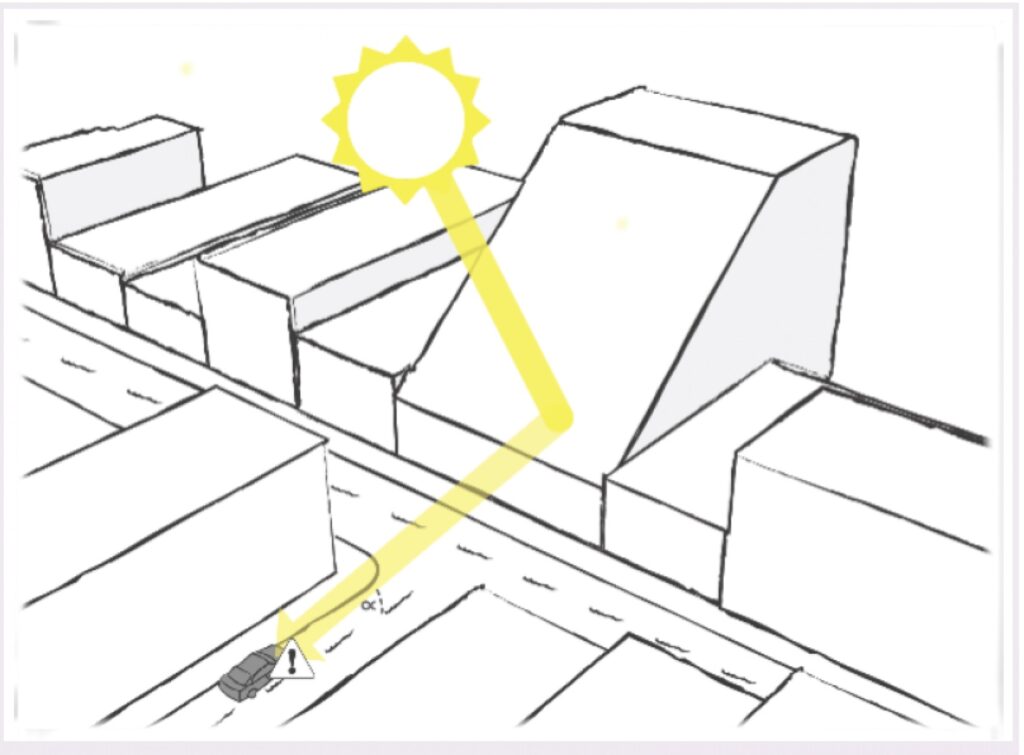
The risk of reflected glare is greater for inclined glazing.
Building materials
Glass and glossy cladding are widely used in construction, but when used extensively (combined with location and design factors) they can cause more reflected glare than other materials.
Glass is the main source of reflected glare, with particularly high intensity, visible from many positions and directions throughout the day and year. Reflected light is usually strongest when the sun strikes the glass at an angle. Even glass treated to reduce glare can still cause dazzling reflections.
Other glossy surfaces, such as gloss coatings, can also produce strong reflected light similar to glass. Cladding materials such as polished (or satin-finished) stainless steel can also cause extremely intense solar reflections.
Matt or smooth surfaces, such as coatings, wall paint or concrete, can also cause glare, although the reflection is usually less intense than from glass or polished surfaces. Buildings using glass and glossy surfaces carry a higher risk of reflected glare than those with matt, rough or light-diffusing textured surfaces.
2. Light reflectance and productivity
Many studies over the years have shown that appropriate lighting increases productivity and improves employee mood. As energy-saving and green building solutions have become widespread, conventional lighting technology has improved considerably. More and more industrial warehouses are integrating these advanced, energy-efficient lighting systems into their operating costs, improving operational efficiency and protecting the environment. However, one thing lighting engineers cannot control is light reflection.
Effective lighting does not rely solely on windows and lamps but also on how light interacts with the surfaces in a space. The Light Reflectance Value (LRV) is a useful tool for determining how light or dark a space is, affecting mood, productivity and energy efficiency. To achieve the reflectance needed to increase brightness, boost productivity and save energy, the LRV of surfaces such as floors, walls and workspaces should be considered.
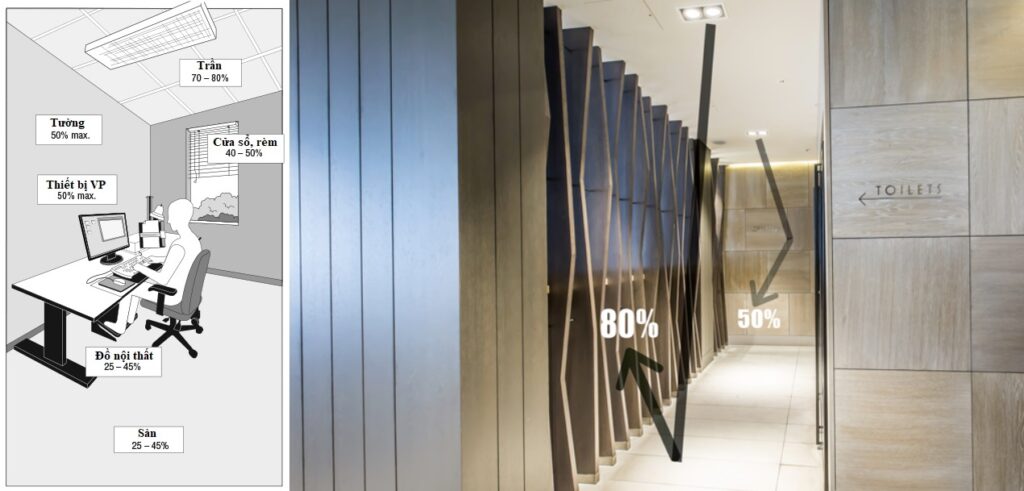
Many luminaires are now designed to reflect light off surfaces such as walls, ceilings and objects, distributing light evenly in the workplace. Recommended reflectance percentages for surfaces in a typical office include:
- Furniture: 25–45%
- Window blinds: 40–50%
- Walls: up to 50%
- Business equipment: up to 50%
- Ceilings: 70–80%
- Floors: 20–40%
3. Daylight reflectance, colour and gloss
Colour and gloss are commonly used by material suppliers and construction companies as criteria for product quality control, whereas daylight reflectance is a relatively new concept in the construction industry. Daylight reflectance is becoming an important factor in assessing energy performance and living environments, influencing how natural light is optimised in built spaces.
Daylight reflectance and colour
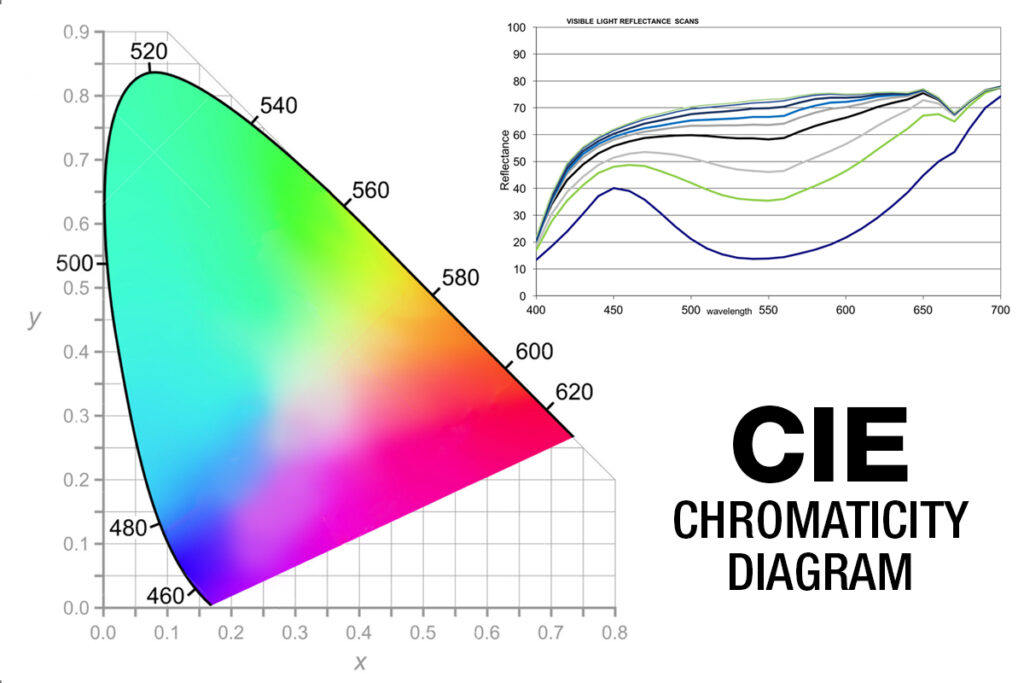
Total and diffuse daylight reflectance are directly related to the colour of a material. Light-coloured materials usually have high total or diffuse daylight reflectance, while dark-coloured materials have lower reflectance. Although our eyes cannot quantify daylight reflectance precisely, they can judge it qualitatively.
Most modern colour-measuring instruments with integrating-sphere geometry can measure colour in SCI mode (specular component included) or SCE mode (specular component excluded). Colour measured in SCI mode corresponds to total daylight reflectance, while colour measured in SCE mode corresponds to diffuse daylight reflectance.
Daylight reflectance and gloss
Daylight reflectance is directly related to the gloss of a material. High-gloss materials usually have high daylight reflectance, while low-gloss materials have low daylight reflectance. Our eyes can judge qualitatively whether a surface has high or low gloss.
A gloss meter can determine the gloss level of a material. However, the relationship between gloss meter readings and daylight reflectance is only qualitative, and the two cannot be compared quantitatively.
4. Requirements of the National Technical Regulation on Energy Efficient Buildings
Clause 2.1.2 – QCVN 09:2017/BXD Requirements for the total thermal resistance R0 of the opaque parts of external walls and roofs:
- External above-ground walls (opaque parts) of air-conditioned spaces must have a minimum total thermal resistance R0.min of not less than 0.56 m2K/W;
- Flat roofs and roofs with a slope of less than 150 directly above air-conditioned spaces must have a total thermal resistance R0.min of not less than 1.00 m2K/W.
- NOTES:
- Roofs with reflective materials: the thermal resistance R0,min may be multiplied by a factor of 0.80 for roofs designed with reflective materials having a reflectance of 0.70–0.75 to increase the reflectance of the external roof surface;
- Roofs with a slope of 150 or more: the minimum total thermal resistance may be determined by multiplying R0.min by a factor of 0.85;
- Roof assemblies exempt from clause 2.1.2: more than 90% of the roof surface is shaded by a fixed, ventilated shading structure. The shading structure must be at least 0.3 m above the roof surface to be considered ventilated between the roof and the shading layer (a double-layer roof with a convective air gap in between).
- NOTES:

For more information on the daylight reflectance of building materials, please contact the Energy Efficiency Testing Laboratory – Centre for Environment and Construction Mechanics – Vietnam Institute for Building Materials for assistance.
Contact: Centre for Environment and Construction Mechanics
Address: Lane 235 Nguyen Trai Street – Khuong Dinh – Hanoi, Vietnam
Tel: +84 24 8582217 (ext. 102)
Fax: +84 24 38581112
Mobile: +84 912 181 479 or +84 915 502 834
Email: thietbimoitruong@vibm.vn; tamnt.tbmt@gmail.com; lecaochien@gmail.com
Website: https://vibm.vn