SRI Calculator for Building Envelopes and Paving Materials
How to use the SRI calculator
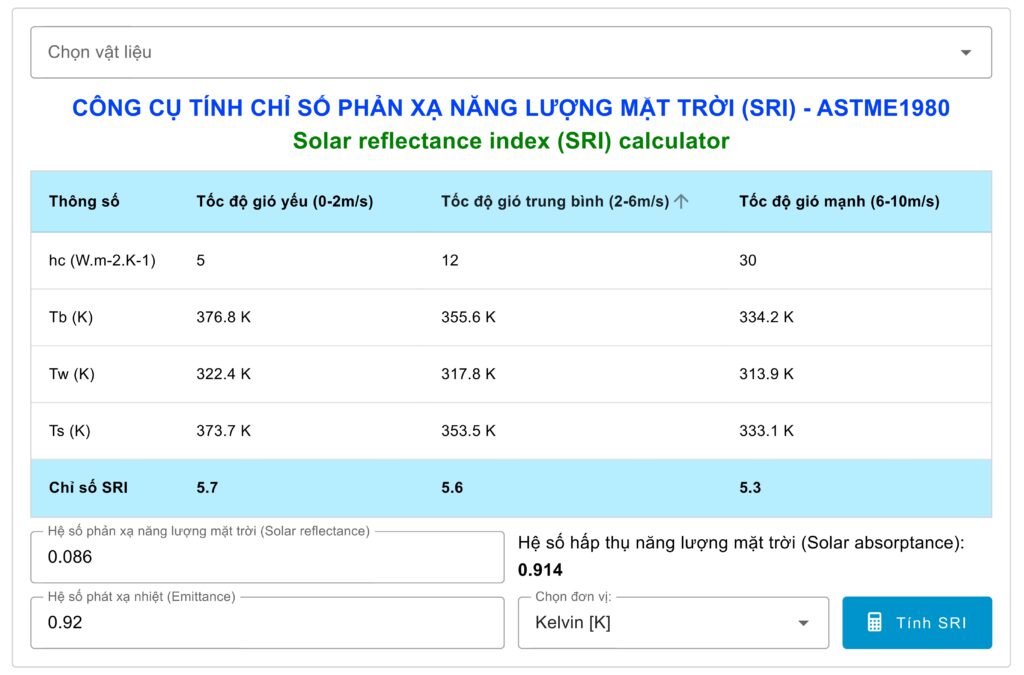
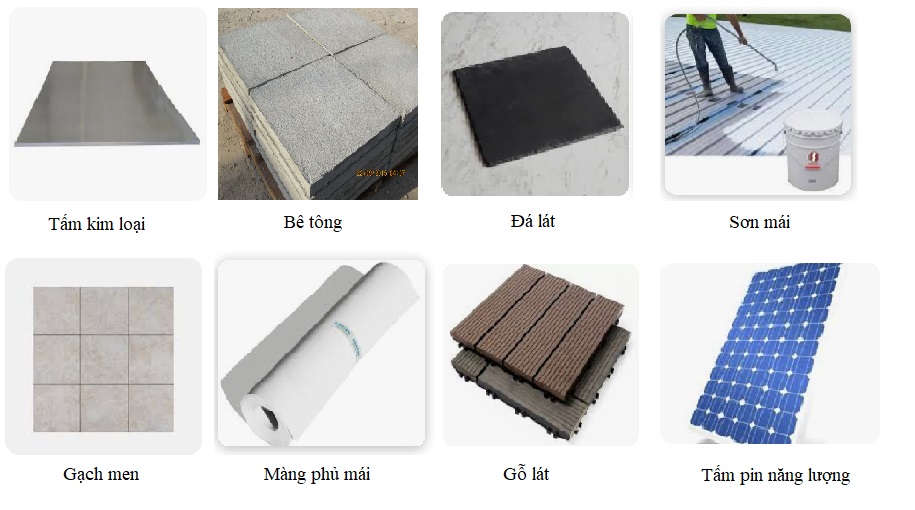
To calculate the SRI, simply enter the material’s solar reflectance and thermal emittance into the SRI calculator above, or select a material from the built-in database, then click the SRI icon to get the value instantly.
- Solar reflectance (reflectance) expresses the ability of a material surface to reflect energy, with values from 0 to 1. A reflectance of 0 means the material absorbs all incident energy (like a perfect black body), while a reflectance of 1 represents a surface that reflects all incident energy (like a perfect white surface). If the solar reflectance is given as a percentage, convert it to a decimal (e.g. 68.6% = 0.686).
- Thermal emittance (emissivity) measures the ability of a material surface to radiate heat compared with a perfect black body at the same temperature. Quantitatively, emittance ranges from 0 to 1: a material with an emittance of 1 is a perfect black body that absorbs and radiates all thermal energy received, while a material with an emittance of 0 radiates no heat. If the thermal emittance is given as a percentage, convert it to a decimal (e.g. 86.6% = 0.866).
- The Solar Reflectance Index (SRI) evaluates the ability of a material surface to reflect solar heat and stay cooler in sunlight. The SRI combines two key factors: solar reflectance and thermal emittance of the material and is calculated in accordance with ASTM E1980. SRI = 0 corresponds to a standard black material that absorbs all energy and retains the most heat; SRI = 100 corresponds to a standard white material that reflects heat best and keeps the surface cool. SRI > 100 can occur for some materials with very high reflectance and emittance, making them cooler than the standard white surface in sunlight.
What the Solar Reflectance Index (SRI) means
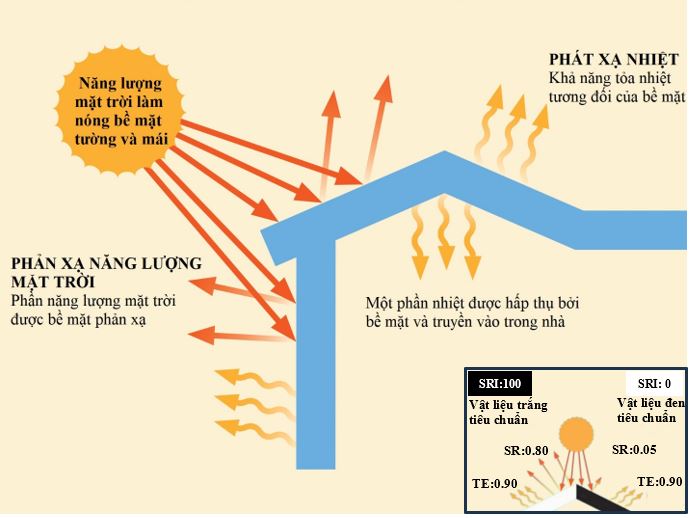
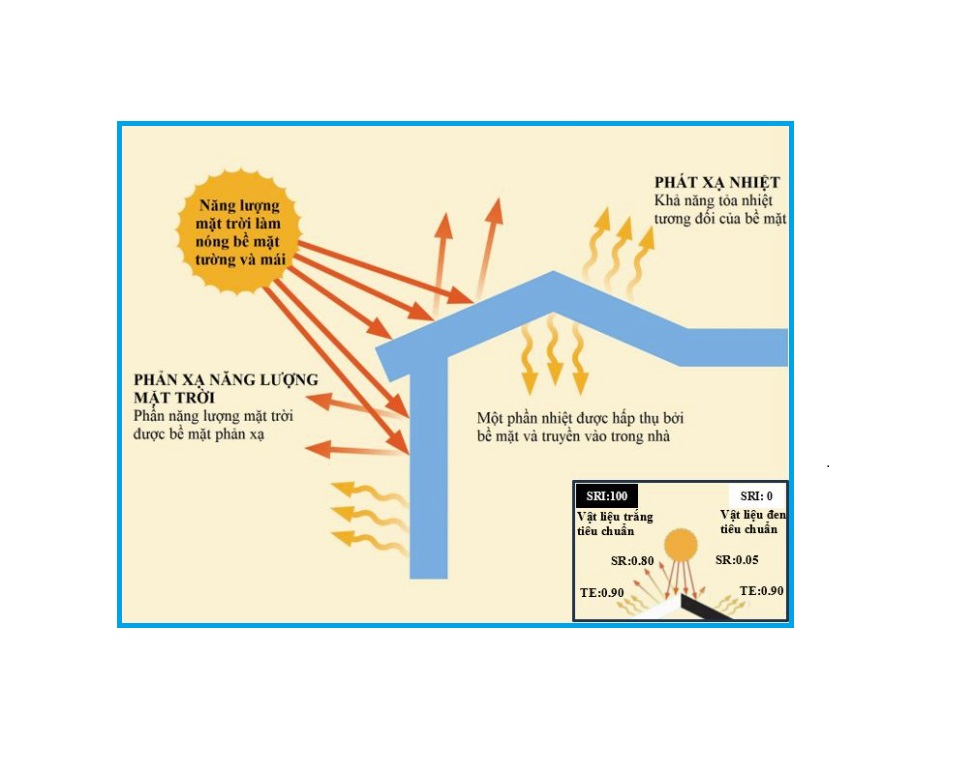
In sunlight, black surfaces are usually much hotter than white ones. To mitigate the urban heat island effect, cooler surfaces are preferred. However, directly comparing surface temperatures when selecting materials is difficult because surface temperature depends on many factors, including solar radiation and wind speed. The SRI (Solar Reflectance Index) is a normalised index for comparing the surface temperatures of different materials. The higher the solar reflectance, the more solar energy is reflected away from the surface and the less heat it absorbs. However, part of the solar energy is still absorbed as heat. The higher the thermal emittance, the more of the absorbed heat is radiated away from the surface, keeping it cooler. The surface temperature of a material is determined by two main factors:
- Absorbed solar radiation: the amount of solar radiation absorbed by the material, which raises its surface temperature.
- Emitted heat: the heat that the material surface, after absorbing solar radiation, releases to its surroundings through processes such as convection and radiation, lowering its surface temperature.
Absorbed solar radiation:
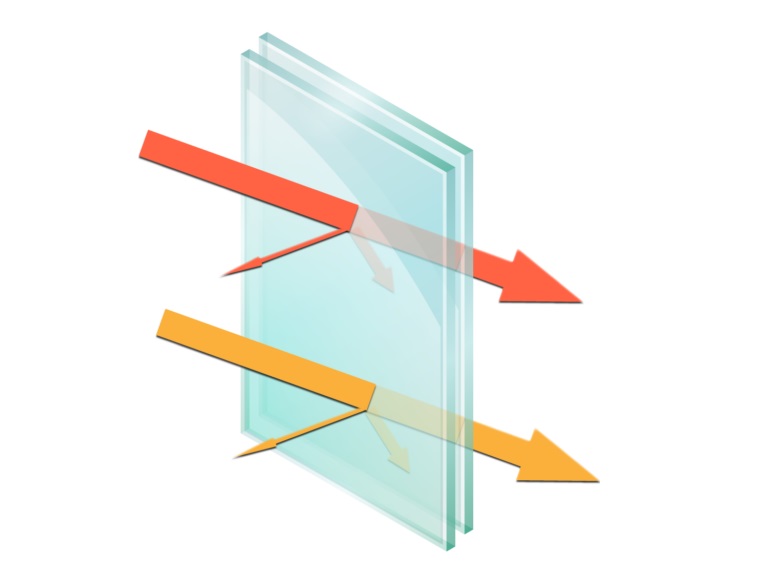
The amount of solar radiation absorbed depends on the material’s solar absorptance – the fraction of incident solar radiation absorbed by the surface. For example, if 500 W of solar radiation strikes a surface and 300 W is absorbed, the surface absorptance is 300 W / 500 W = 0.60.
Absorptance is directly related to the material’s solar reflectance – the fraction of solar radiation reflected by the surface. For opaque materials, incident solar radiation can only be absorbed or reflected, so absorptance and reflectance add up to 1. In the example above, the surface reflectance is 1 – 0.60 = 0.40. Solar reflectance is also known as total solar reflectance (total solar reflectance – TSR).
Emitted heat:
The amount of heat released depends on the material’s thermal emittance. After absorbing part of the solar energy, the surface heats up and releases heat to the air or surroundings through two mechanisms:
- Convection – heat transfer to the surrounding airflow. Convective heat transfer depends on the airflow speed near the surface. For convection, airflow speed is not an intrinsic material property but is defined in standards. The SRI standard specifies three reference airflow conditions (low, medium and high wind), ensuring that surface temperature and SRI calculations are normalised across conditions.
- Radiation – heat transfer by infrared radiation, which depends on the material’s emittance.
Calculating surface temperature:
To calculate the surface temperature of a material under solar radiation, two key properties must be considered – the solar reflectance (or absorptance) and the thermal emittance – together with three environmental conditions: low, medium and high wind. These factors determine how much the surface heats up in sunlight.
For example, in a sample SRI test, a material with a solar reflectance of 0.086 (8.6%) and an emittance of 0.92, exposed to medium wind, reaches a surface temperature of 353.5 K (80.3 °C). This high temperature indicates a surface with low solar reflectance, typically dark in colour, such as black, which heats up very quickly. Although actual temperature values can be useful, they are not convenient for directly comparing different materials. For easier comparison, the SRI normalises surface temperatures on a scale from 0 to 100, allowing users to easily judge how cool a surface stays in sunlight; materials with a high SRI generally reflect heat well and keep lower surface temperatures.