Calculating the SHGC, U-value and SC of Glass Products
How to use the online calculator
This tool lets you easily calculate the thermal transmittance (U-value), Solar Heat Gain Coefficient (SHGC) and Shading Coefficient (SC) of glazing. With just a few simple steps, you can test many different glazing configurations from the built-in database, helping you select and compare options quickly. To start, simply click and choose from the material library as follows:
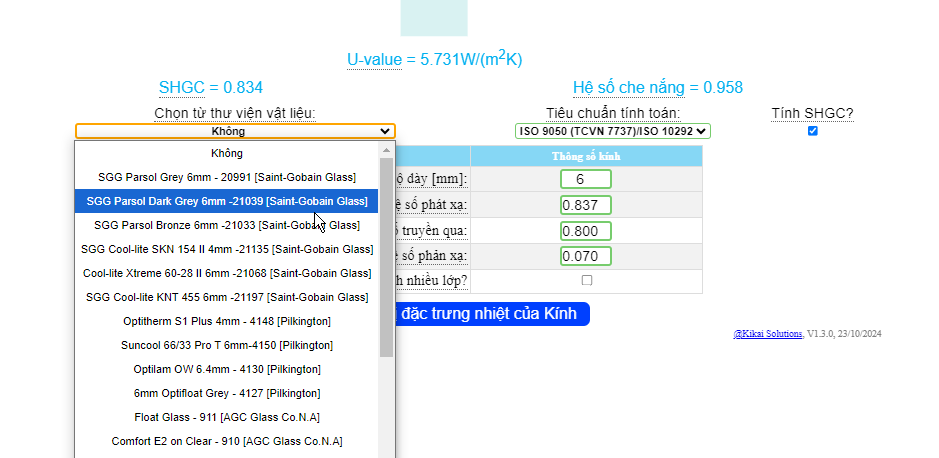
Results are calculated automatically, including the U-value in accordance with ISO 10292 or EN 673 (TCVN 9502), and the SHGC and SC in accordance with ISO 9050 (TCVN 7737) or EN 410.
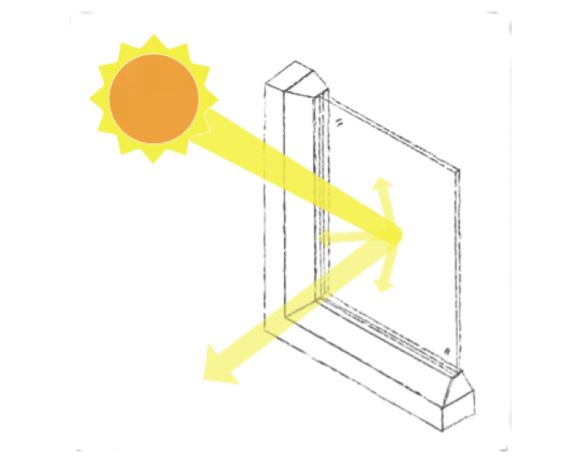
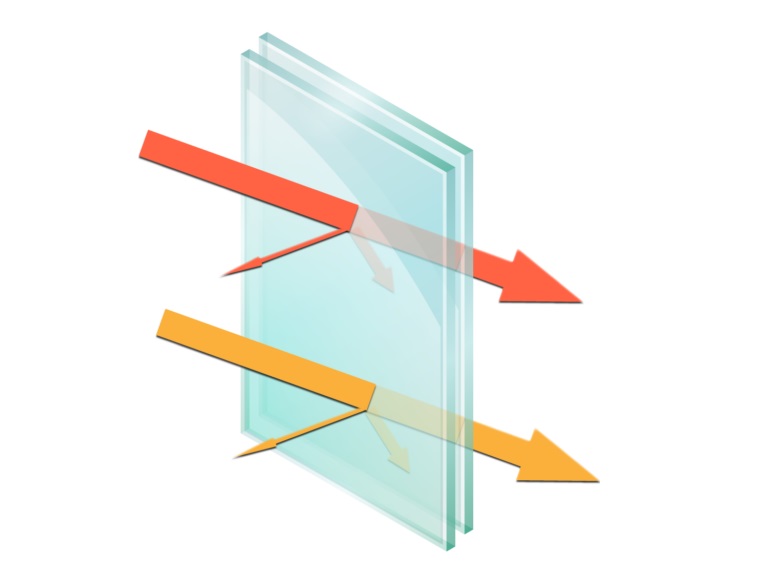
- SHGC (Solar Heat Gain Coefficient) is a measure of how much solar heat is transmitted through windows, glass walls or other transparent building surfaces into the interior. SHGC is expressed as a value from 0 to 1:
+ SHGC = 0: no solar heat is transmitted through the surface;
+ SHGC = 1: all solar heat is transmitted through the surface;
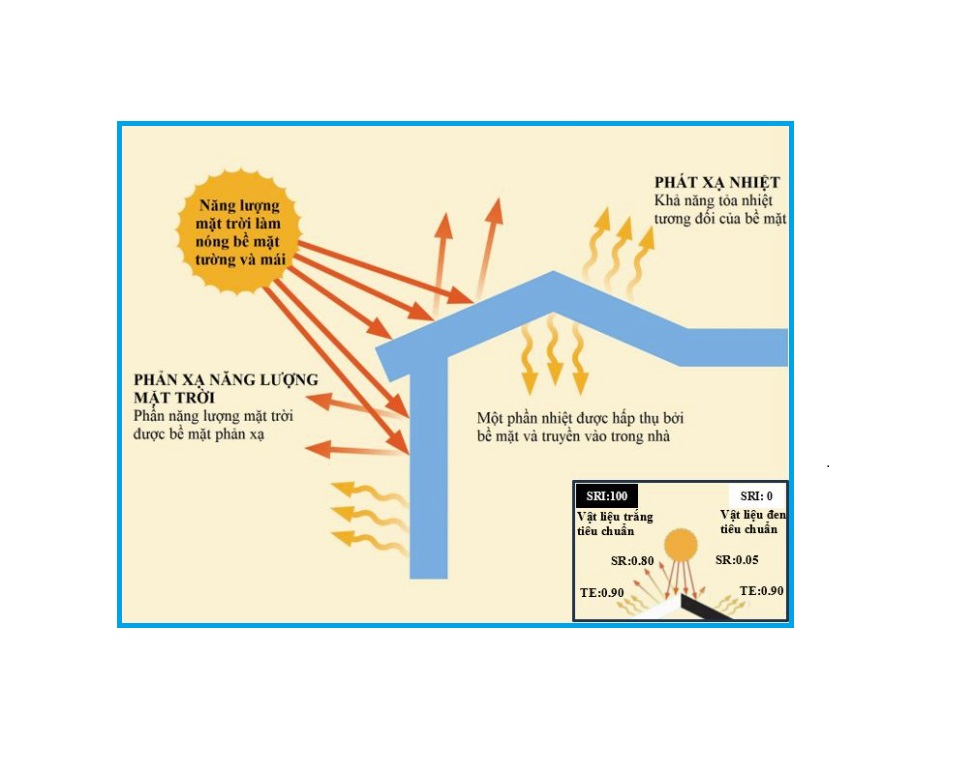
Windows or materials with a low SHGC block more solar heat and keep interiors cooler, which suits hot climates. Conversely, materials with a high SHGC let more heat through and are typically used in cold regions to make use of solar heat for space heating.
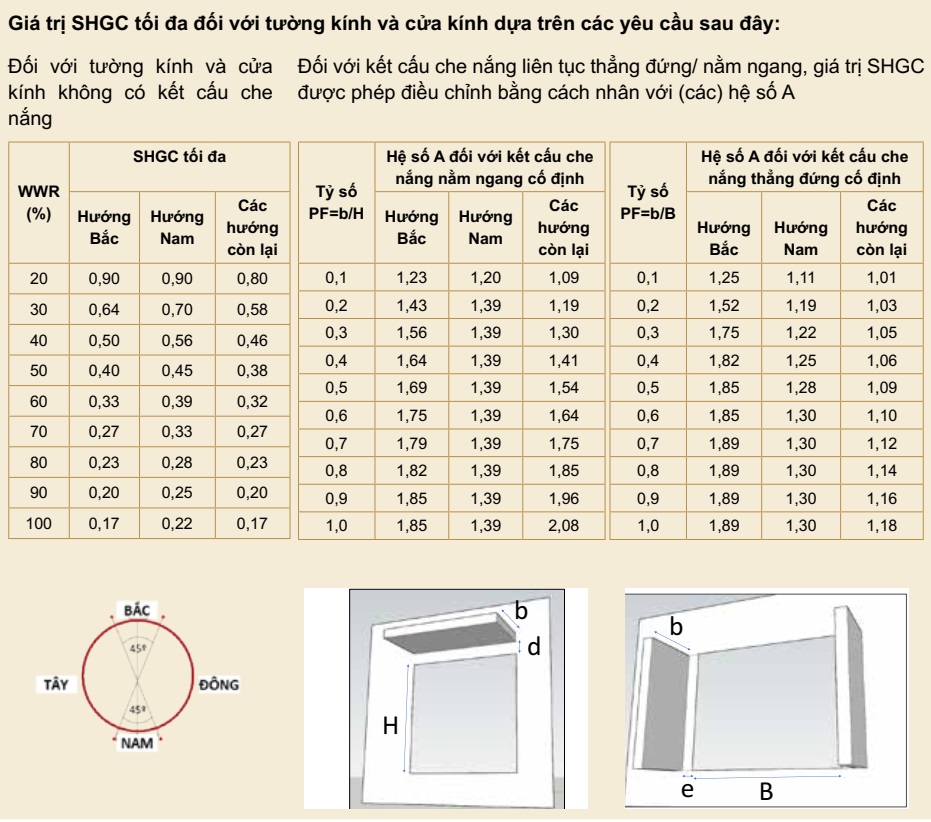
SHGC is a key factor in energy-efficient building design, especially for glazed doors, glass façades and skylights. In Vietnam, QCVN 09:2017/BXD on energy-efficient buildings specifies the following maximum SHGC values:
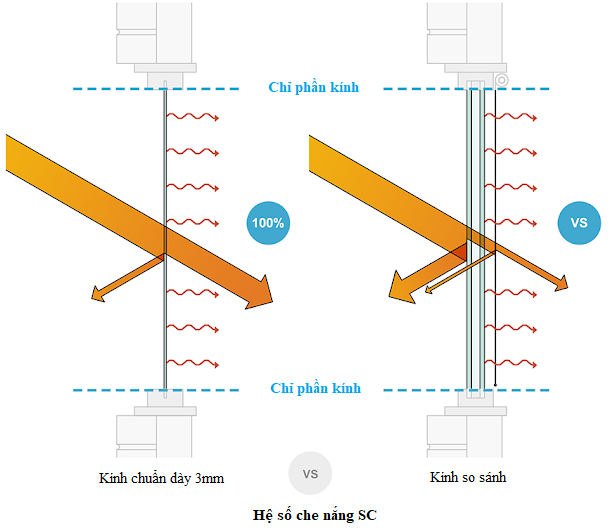
- SC (Shading Coefficient) The shading coefficient indicates a material’s ability to reduce solar heat and is commonly used to evaluate how effectively glass or windows block solar heat gain. SC is the ratio of solar heat transmitted through the glass to that transmitted through standard 3 mm clear glass (SC = SHGC/0.87).
+ SC = 1: the glass provides no shading; solar heat passes through as with standard glass.
+ SC < 1: the glass provides shading; less solar heat passes through than with standard glass.
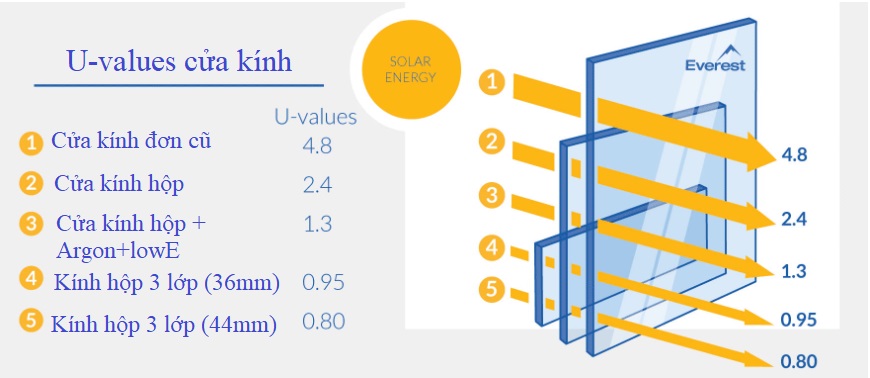
- U-value (thermal transmittance) of glass measures the insulating performance of the glazing or window. The U-value indicates how much heat is lost through the glass from inside to outside or vice versa, especially in buildings. The lower the value, the better the insulation, helping to keep interior temperatures stable and saving energy for heating or cooling.
+ Low U-value: good insulation and reduced heat loss, suitable for keeping heat in during cold climates or keeping interiors cool in hot climates.
+ High U-value: the glass transmits more heat, causing heat loss and higher energy consumption for heating or cooling.
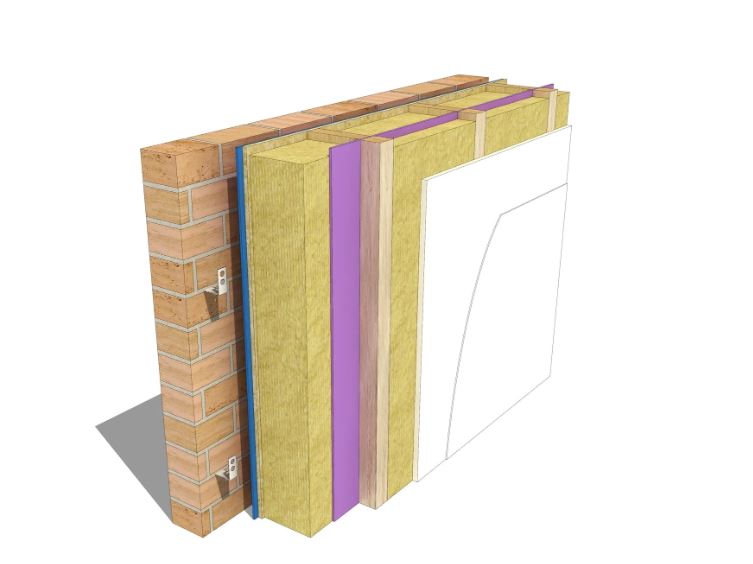
The U-value, SHGC and SC of glass depend on the thermal and optical properties of the glass product, including thermal conductivity, emissivity, transmittance and surface reflectance. If you do not yet have the thermal and optical data for your product, please contact the Energy Efficiency Testing Laboratory – Centre for Environment and Construction Mechanics – Vietnam Institute for Building Materials for assistance.
Contact: Centre for Environment and Construction Mechanics
Address: Lane 235 Nguyen Trai Street – Khuong Dinh – Hanoi, Vietnam
Tel: +84 24 8582217 (ext. 102)
Fax: +84 24 38581112
Mobile: +84 912 181 479 or +84 915 502 834
Email: thietbimoitruong@vibm.vn; tamnt.tbmt@gmail.com; lecaochien@gmail.com
Website: https://vibm.vn