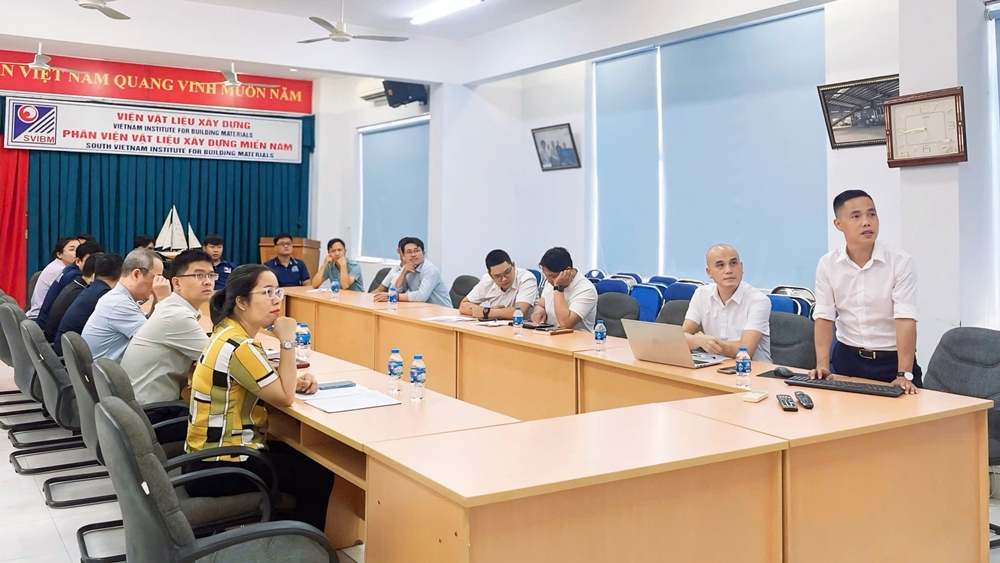
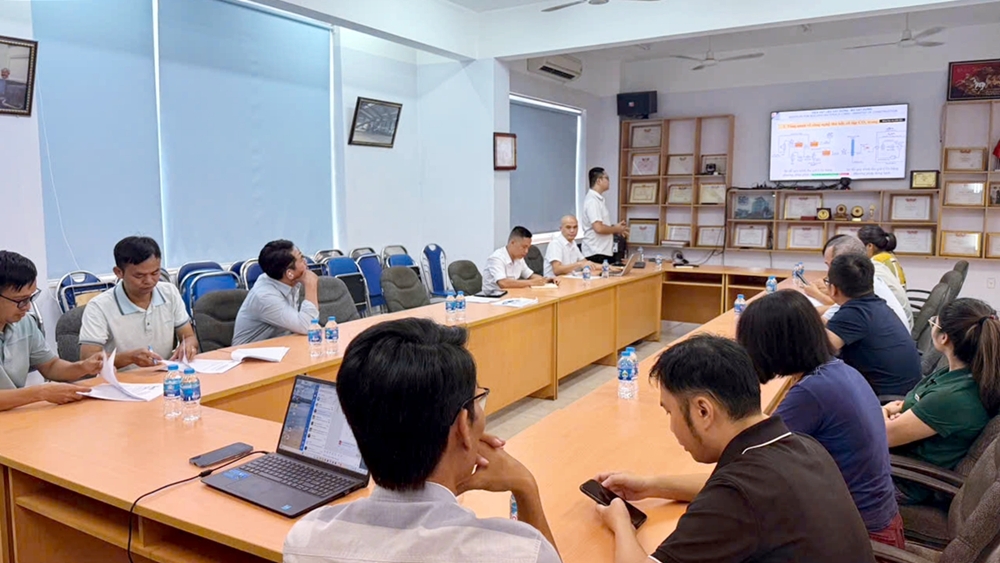
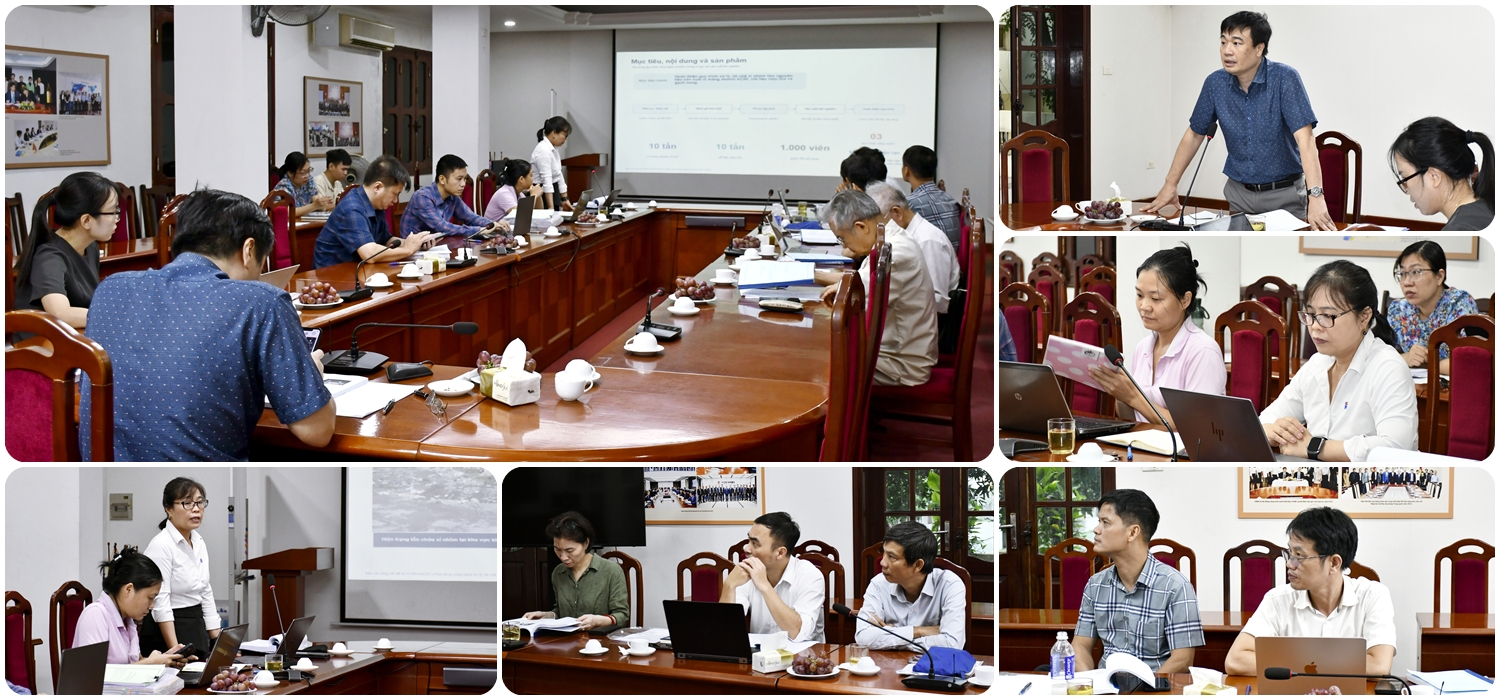
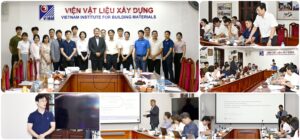
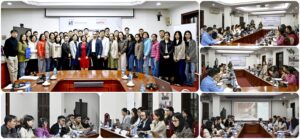
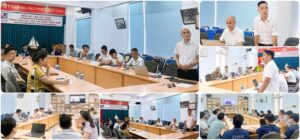
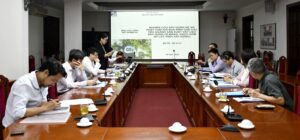
Thematic Workshop “Research on Technological Solutions Using Carbon Dioxide in the Production of Precast Concrete Elements to Reduce Greenhouse Gas Emissions”
In his opening remarks, Dr. Le Van Quang emphasised that the thematic workshop not only contributes to the effective implementation of the science and technology task, but also gives the research team an opportunity to share experience, keep up with trends and open up directions for green technology in sustainable, environmentally friendly building materials production, contributing to Viet Nam’s commitment to reducing greenhouse gas emissions.
At the workshop, Eng. Nguyen Huy Dung presented the report “Overview of technologies for capturing, storing and using CO2 in concrete”. He noted that the capture and use of CO2 in concrete is currently regarded as a promising direction that both reduces greenhouse gas emissions and improves product quality. The main mechanism of this technology is carbonation, in which CO2 reacts with Ca(OH)2 from cement hydration to form stable CaCO3 , fixing the CO2, densifying the structure and increasing concrete strength. Worldwide, CO2 curing of precast elements has proven effective both technically and environmentally. In Viet Nam, although still new, the technology is considered to have great potential thanks to the large CO2 emissions from the cement and steel industries. It is a feasible solution in line with the orientation towards green materials and the national emission-reduction targets.
According to the report by Mr. Nguyen Ngoc Nam (MSc.) on “Factors affecting the CO2 curing process and the physical and mechanical properties of concrete”, research results show that CO2 curing at low pressure (2–5 bar) significantly improves the physical and mechanical properties and microstructure of concrete. Early-age (3-day) compressive strength increases by 30–60%, especially for low-grade concrete and mixes containing fly ash and ground granulated blast-furnace slag. At 7 and 28 days, strength remains higher than the control samples, showing that carbonation supports the early stage without hindering hydration. Water absorption decreases significantly as pores are filled with CaCO3 crystals, making the structure denser and more impermeable. SEM/XRD analysis confirmed the formation of stable CaCO3 phases and a reduction in Ca(OH)2, demonstrating the positive effect of CO2. In summary, CO2 curing for 6–18 hours is an effective solution for increasing early strength, reducing permeability and improving the durability of concrete, particularly suitable for low-grade concrete with mineral admixtures.
In the report “Reinforcement protection capability of concrete cured with CO2”, Dr. Le Van Quang – Principal Investigator – shared that test results show CO2 curing creates a stable alkaline environment, limits chloride ion penetration and improves reinforcement protection compared with ordinary concrete. After 18 hours at 3 bar, CO2-cured concrete, especially when combined with fly ash and blast-furnace slag, achieved low chloride permeability charge and higher corrosion potential, clearly demonstrating its resistance to aggressive attack. Sample M35BFS-18 was assessed as optimal, maintaining a potential of −222 mV after 20 cycles and a chloride permeability charge of only 850 C, rated “very low”. These results show that the synergy between CO2 curing and mineral admixtures forms a dense microstructure that extends concrete service life. It can be concluded that CO2 curing significantly reduces the risk of chloride penetration and reinforcement corrosion; combined with mineral admixtures it is even more effective, opening up prospects for application in sustainable precast concrete production in Viet Nam.
Mr. Do Minh Thoi (MSc.) presented the topic “Economic, technical and environmental efficiency of CO2 curing technology”. The analysis shows that the technology brings comprehensive benefits in all three aspects. Economically, the additional cost is very low (about 2% per m³) and is offset by cement savings and shorter curing times, which increase productivity. Technically, the technology improves the early strength and long-term durability of concrete, making it particularly suitable for precast elements that need rapid demoulding. Environmentally, each m³ of concrete can absorb an average of 13 kg of CO2, while a further 35–40 kg of CO2 emissions is avoided through cement savings; for a medium-sized plant, the amount of CO2 reduced and sequestered can reach several thousand tonnes per year. CO2 curing is thus a feasible and sustainable solution that simultaneously meets three goals: economic efficiency, technical improvement and environmental protection. This provides a solid basis for recommending its deployment in production in Viet Nam, contributing to the development of green, environmentally friendly building materials.
Following the presentations, delegates actively exchanged views, discussed and commented on the reports, and highly appreciated the novelty, practicality and application prospects of task RD19-24. The project has proposed a feasible technical procedure for CO2 curing in the production of precast concrete elements in Viet Nam, and demonstrated comprehensive economic, technical and environmental efficiency.
After an intensive, serious and responsible working session, the thematic workshop “Research on technological solutions using carbon dioxide (CO2) in the production of precast concrete elements to reduce greenhouse gas emissions” completed its planned content and objectives. The workshop heard 4 related science and technology research reports and received many useful comments and suggestions.
Concluding the workshop, the chair requested the research team to build on the results achieved and incorporate the comments to finalise the project outputs.
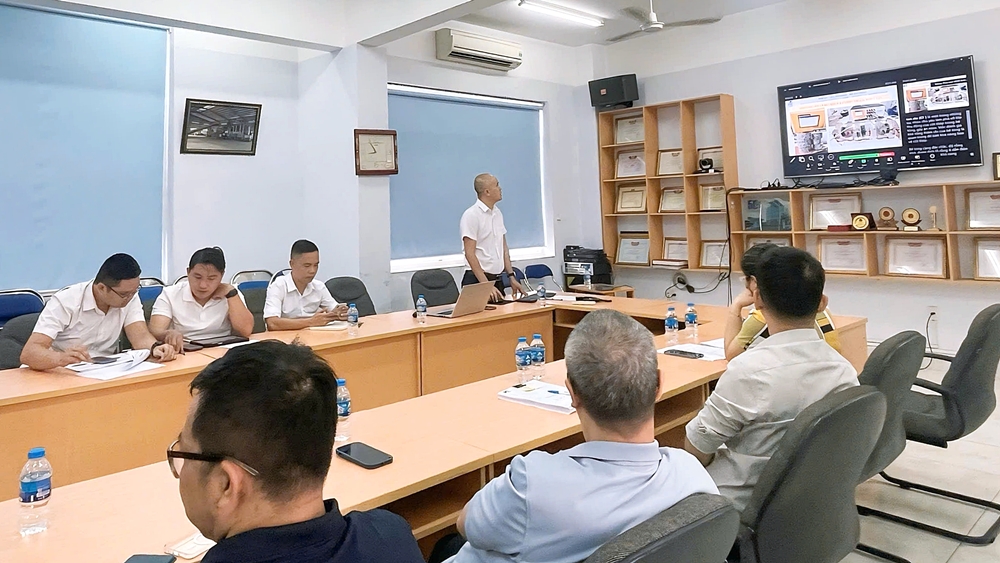
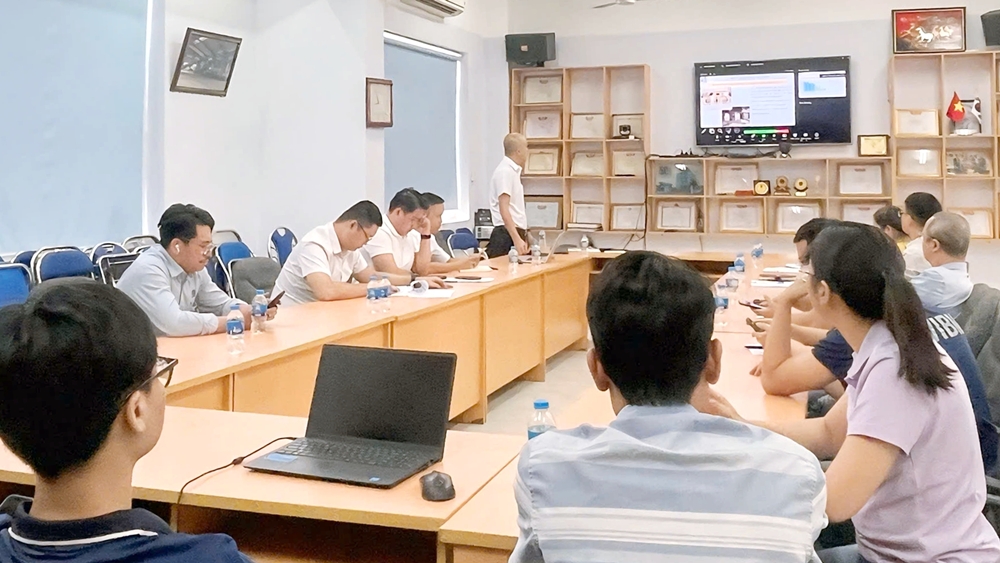
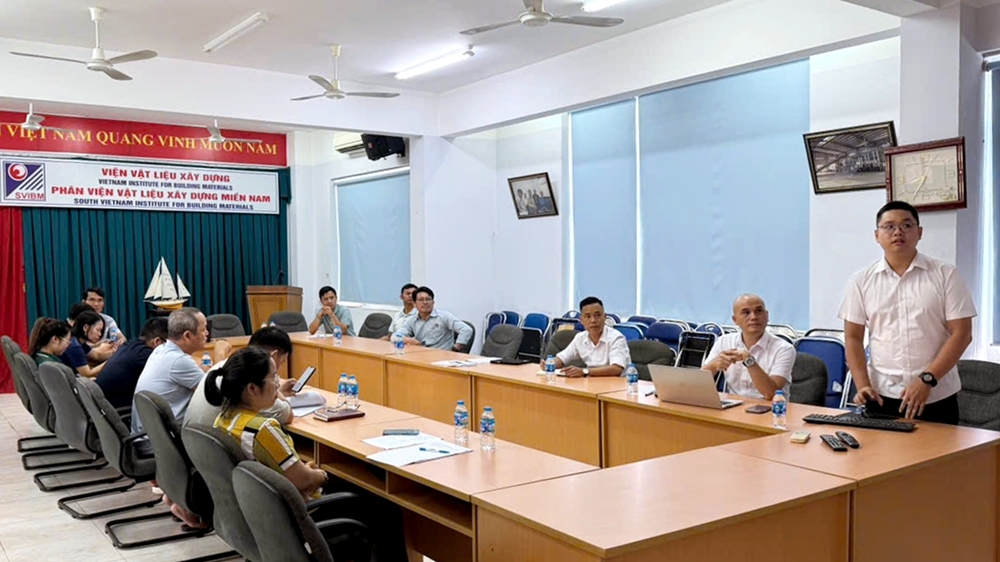
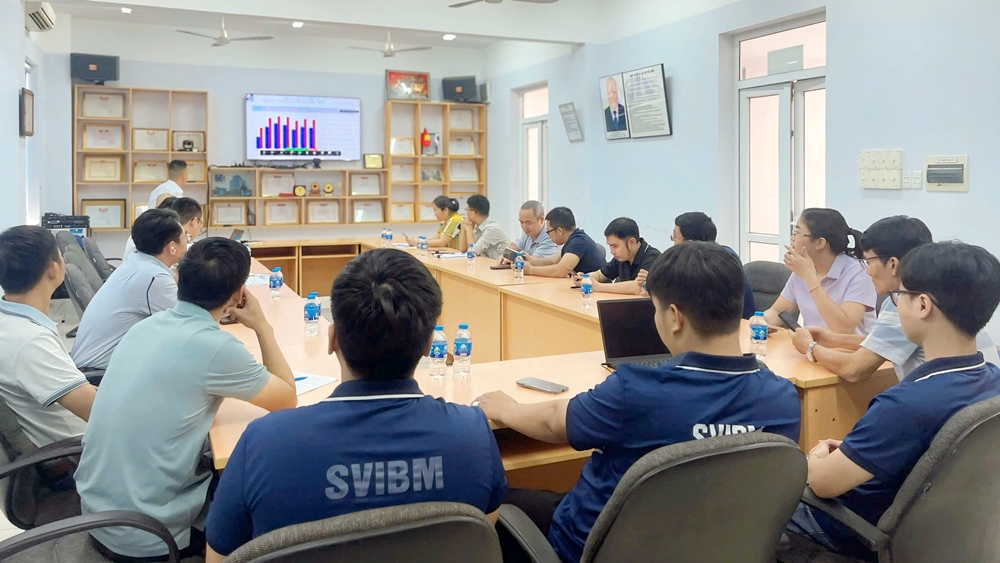
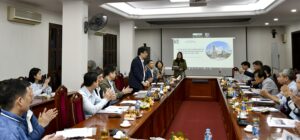
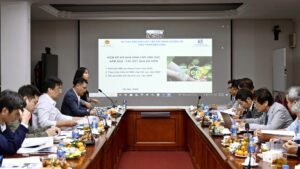
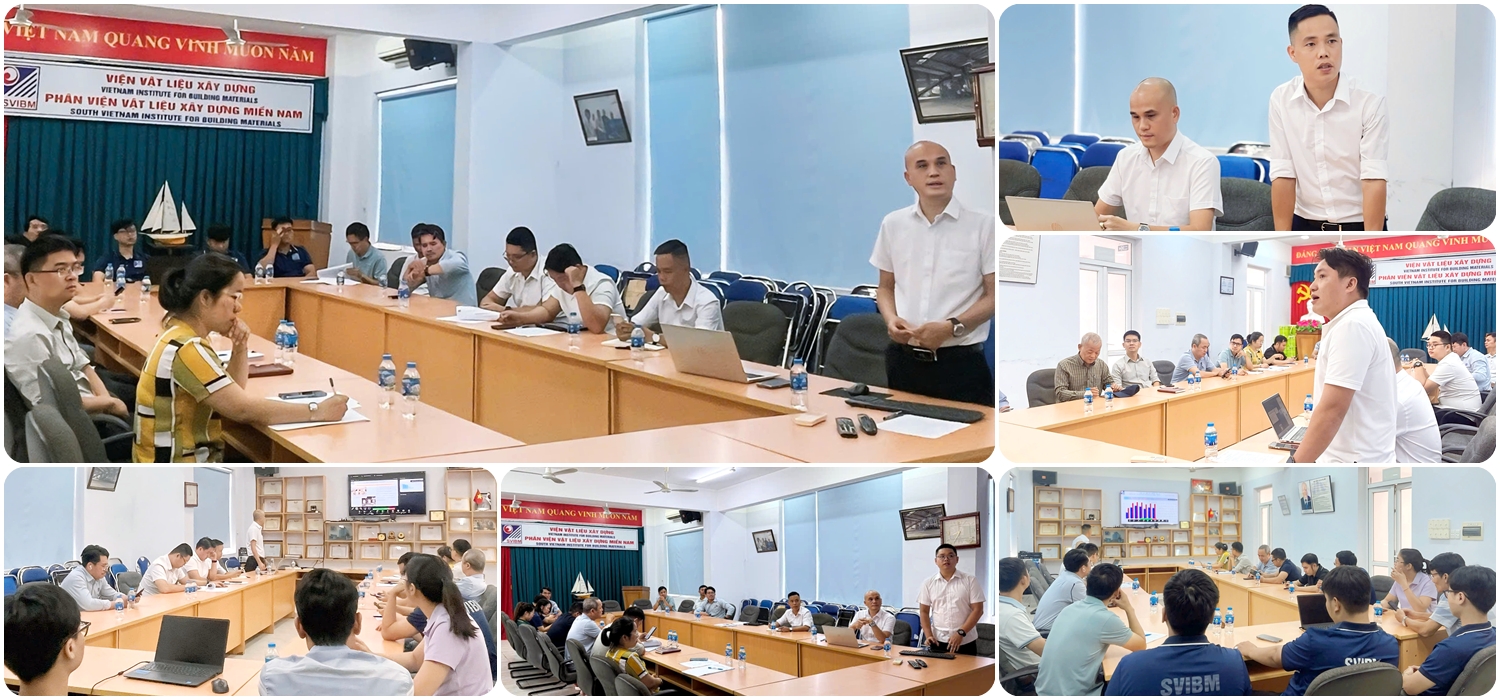
Photos from the workshop