VIBM: Determining Formaldehyde Emission Using the 1 m³ Chamber Method
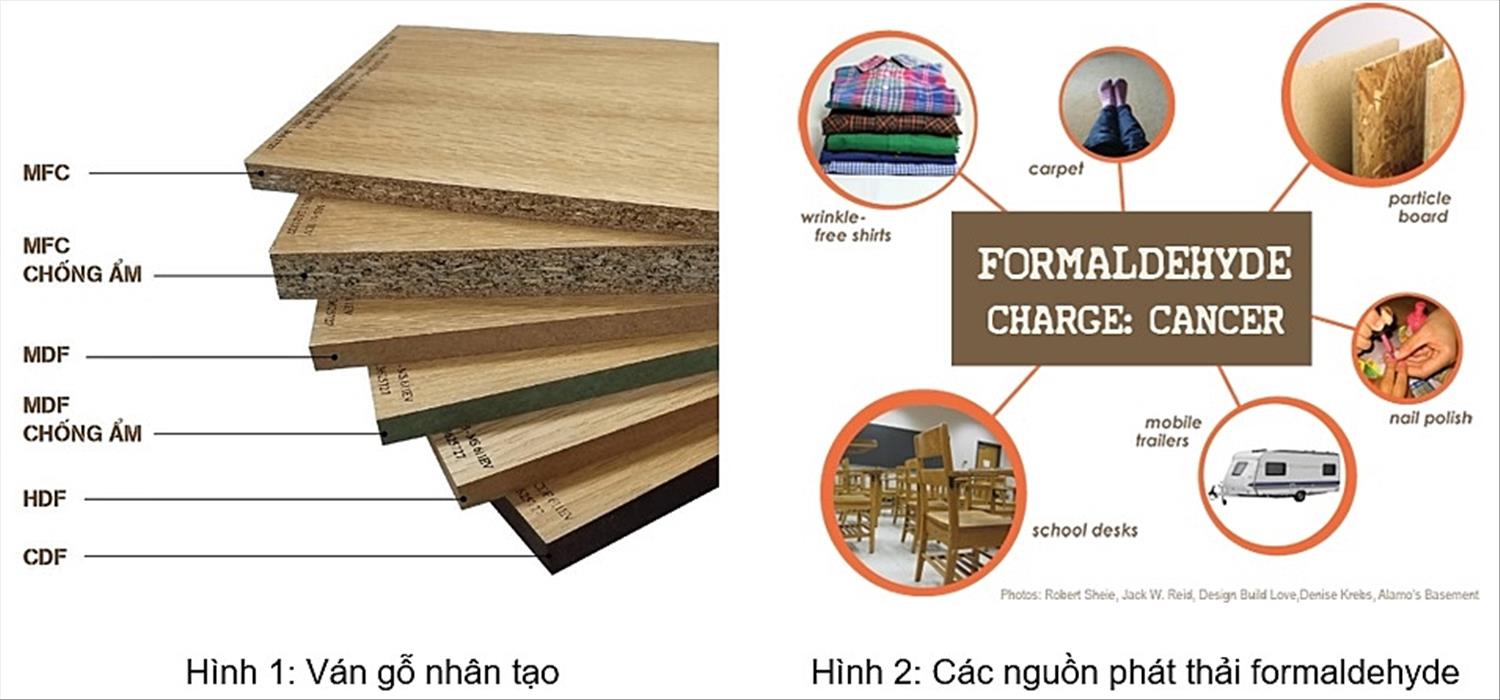
Many types of engineered wood panels are currently used for furniture in the Vietnamese market, such as fibreboard (MDF), particleboard, plywood and finger-jointed boards… Among them, fibreboard is a focus of investment by domestic enterprises and has a very large market, with many furniture applications such as beds, cabinets, tables, chairs and wood flooring.
Urea formaldehyde (UF) and phenol formaldehyde (PF) resins are the most widely used binders in the wood processing industry for manufacturing engineered wood panels for interiors, especially fibreboard (MDF). In practice, however, UF and PF resins often contain high levels of free formaldehyde. Under favourable conditions such as high humidity and temperature, engineered wood panels and furniture made from them emit formaldehyde gas, which, after contact with and entry into the human body, can cause many health problems such as irritation of the eyes, nose and throat, dermatitis and even cancer. It is therefore necessary to control the formaldehyde content of these products.
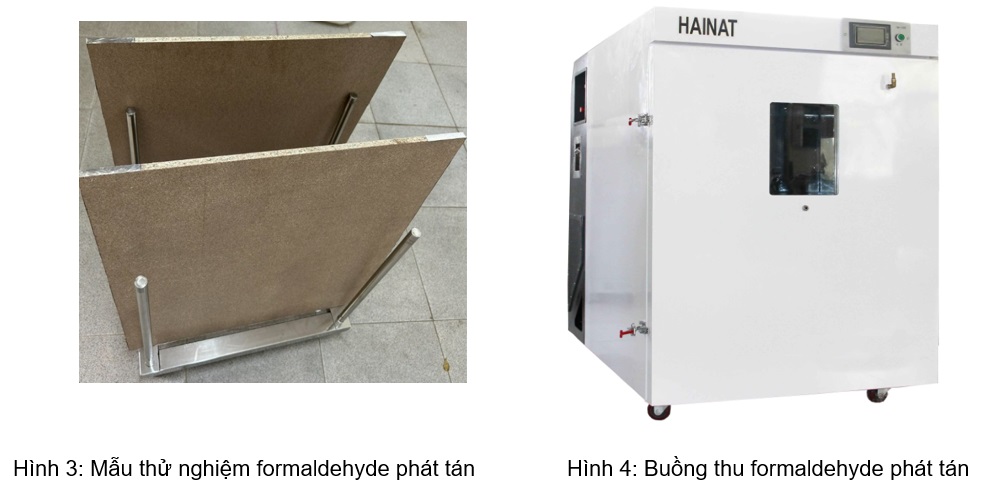
There are many methods for measuring emission concentrations, such as the 1 m3 chamber method, the desiccator method, the flask method, the gas analysis method and the perforator method… In Viet Nam, emissions from engineered wood panels are controlled, classified and regulated in QCVN 16:2023/BXD and determined by the 1 m3 chamber method according to TCVN 11899-1:2018 (ISO 12460-1). This method most closely reflects actual conditions of use and is used by many countries to classify formaldehyde emission levels.
The test principle is summarised as follows: a test piece of known surface area, pre-conditioned, is placed in a 1 m3 chamber in which temperature, relative humidity, air velocity and air exchange rate are controlled at specified values. Formaldehyde emitted from the test piece mixes with the air in the chamber. The air is sampled periodically at specified intervals. The formaldehyde concentration is determined by drawing air from the chamber through gas washing bottles containing water that absorbs the formaldehyde, and then determining the formaldehyde concentration in the water. The chamber concentration is calculated from the formaldehyde concentration in the water and the volume of air sampled, expressed in milligrams per cubic metre (mg/m3). Sampling continues periodically until the formaldehyde concentration in the chamber reaches a steady state.
The Centre for Organic Materials and Construction Chemicals – Vietnam Institute for Building Materials (VIBM) is a leading research and testing unit in Viet Nam for engineered wood products, gypsum boards, paints, waterproofing materials, composite materials, plastics, rubber… The Centre currently assesses formaldehyde emission according to standards such as TCVN 11899-1:2018, ISO 12460-1, EN 717-1, ASTM D6007-02, etc.
Contact details:
Centre for Organic Materials and Construction Chemicals – VIBM
Address: 235 Nguyen Trai Street, Hanoi, Vietnam.
Tel: +84 24 3858 2912; +84 912 280 980; +84 983 373 827; +84 972 214 472
Email: trungtam.vlhc@gmail.com; vatlieuhuuco@vibm.vn
Website: http://vibm.vn