VIBM: Measuring the Natural Radioactivity Index of Building Materials
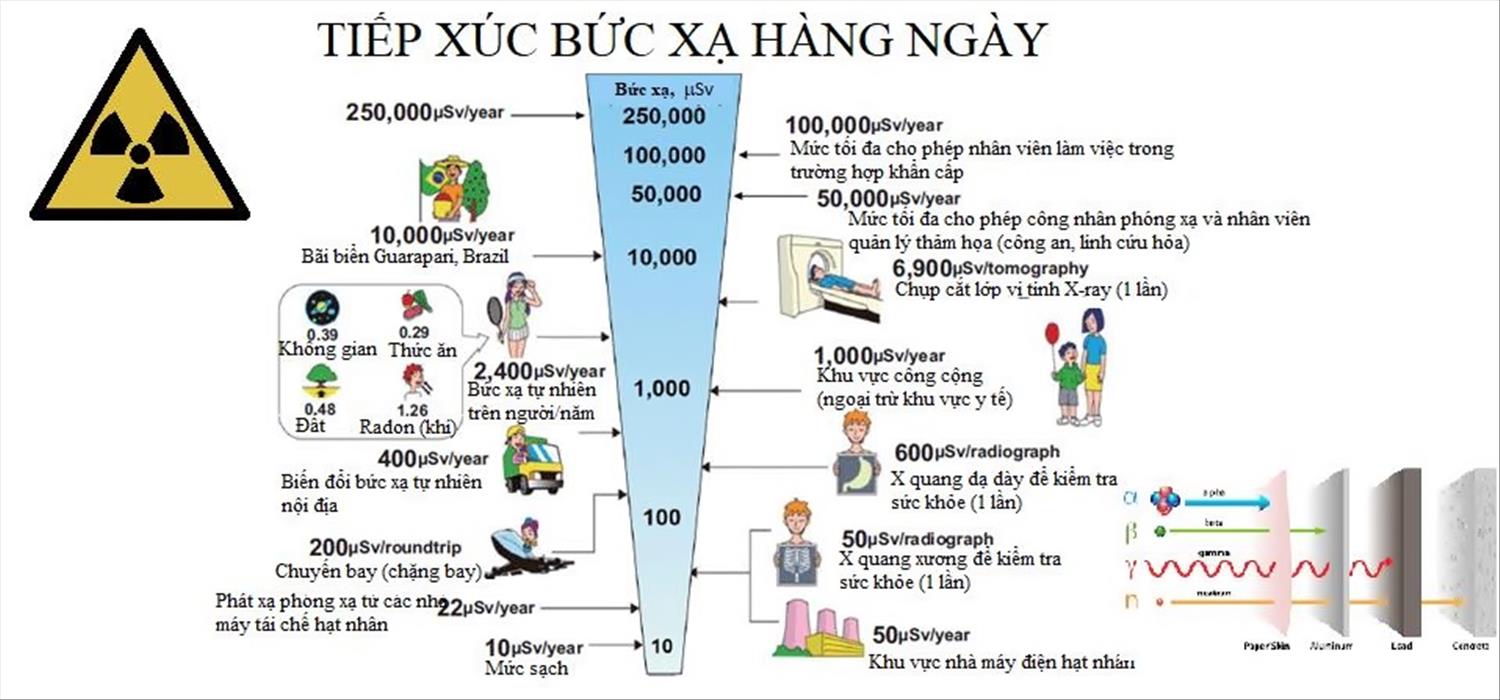
Radioactivity is a form of energy that coexists with humans – it is always present somewhere, but only in relatively small amounts. Radioactive substances can be detected by instruments because they release energy as their atoms decay, that is, as atoms successively break down into extremely small particles.
Some of this radioactive activity knocks electrons out of other atoms, creating electrically charged particles – a process called “ionising radiation”. The three types of ionising radiation particles, from largest to smallest, are:
- Alpha particles – two protons and two neutrons bound together.
- Beta particles – electrons or positrons (positively charged electrons).
- Gamma rays – very small photons with different wavelengths.
All building materials are naturally radioactive, because natural raw materials such as soil and rock used to produce them contain natural radionuclides of the uranium (238U) and thorium (232Th) series and the radioactive isotope of potassium (40K). These radionuclides emit gamma rays, a source of external radiation exposure. The level of natural radioactivity also depends on how materials are combined during production, so radionuclide concentrations can increase through manufacturing. For example, in coal-fired power plant fly ash and slag, combustion raises the concentrations of potassium, thorium and radium to ten times their natural levels in coal.
By the 1990s, the International Commission on Radiological Protection (ICRP) had issued regulations on artificial radiation sources. The increase in natural radioactive substances also needs to be considered – for example, radiation from flights, mining or living in buildings. Radiation doses in buildings are of particular concern, since the use of certain materials can significantly increase radiation exposure for many people, for instance through the use of industrial waste as additives in building materials production to reduce costs and save resources, or the use of recycled materials.
Many countries have issued standards limiting the permissible natural radioactivity in building materials to protect human health and the environment during use. The radioactivity level of building materials is determined by the activity concentrations of Ra-226, Th-232 and K-40. To compare the radioactivity of different materials, a common index reflecting their combined activity is needed.
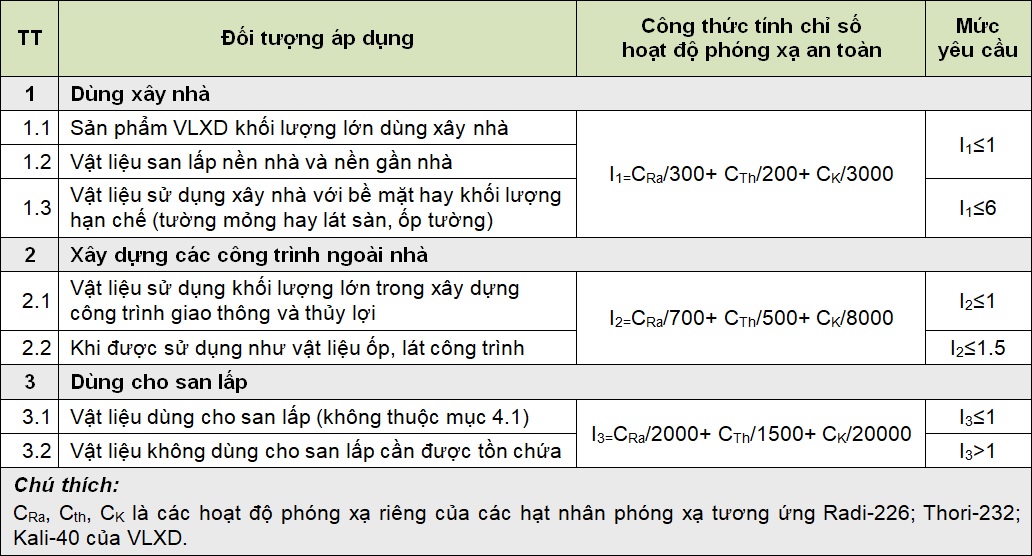
The general method is to sum all three activities, each weighted by a coefficient reflecting its dose contribution. The radioactivity level of natural radionuclides (Ra-226, Th-232 and K-40) in building materials is set on the basis that the effective dose to the public from building materials does not exceed 1 mSv/year, expressed through the activity concentration index (I), excluding radon and the contribution of environmental background radiation. In Vietnam, the safe radioactivity level of building materials under TCXDVN 397:2007 is assessed using the activity concentration index as follows:
Figure 1: Safe radioactivity levels of building materials
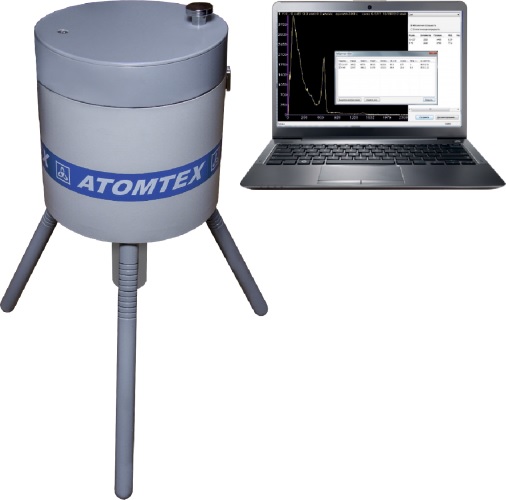
The specific activity of building materials is determined by gamma spectrometry, measuring natural gamma radiation at energy levels characteristic of the U (Ra), Th and K radionuclides in the material and comparing them with the instrument’s reference standard to determine their specific activities.
Figure 2: Natural radioactivity measuring instrument at the Vietnam Institute for Building Materials (VIBM)
Centre for Environment and Construction Mechanics – VIBM has been assigned by the Ministry of Construction to manage environment and safety in the building materials industry. The Centre analyses and assesses the natural radioactivity of building materials and controls this property in industrial wastes used as building materials, such as coal-fired power plant fly ash and slag, and iron and steel slag.
Contact details
Centre for Environment and Construction Mechanics – VIBM
Address: Lane 235 Nguyen Trai Street – Khuong Dinh – Hanoi, Vietnam
Tel: +84 24 3558 5928; +84 915 502 834; +84 912 181 479; Fax: +84 24 3858 1112;
Email: thietbimoitruong.vibm@gmail.com
Website: http://vibm.vn
Cao Chien