VIBM: Environmental Noise Survey and Analysis

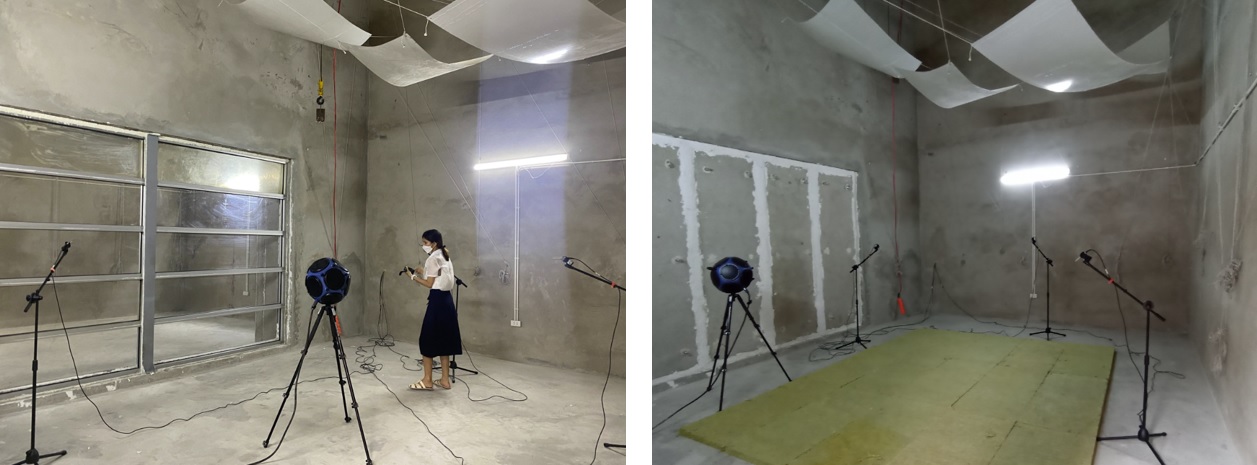
The WHO has identified a number of specific adverse health effects of environmental noise. These may require medical treatment, or take the form of sleep disturbance, psychophysiological stress or negative effects on children’s ability to concentrate and learn.
In Vietnam in recent years, population density has increased with urbanisation. Growth in infrastructure, the modernisation of machinery and the rapid expansion of transport systems have led to more housing, offices and shopping centres being built close to transport corridors. As more people live in a limited area, their exposure to environmental noise increases. In such environments, people are constantly exposed to sounds from all kinds of urban systems that are an integral part of urban life. The perception of sound can be positive (harmonious, pleasant, refreshing, etc.) or negative (annoying, too loud, painful, etc.) depending on the type of sound and the level of exposure. Noise in such a complex environment can come from many sources. Transport systems generate road, rail and aircraft noise, the outdoor noise sources of the built environment. Other outdoor noise includes noise from construction, electrical systems, pumps, compressors and industrial activities. Indoor noise is also a source affecting health. Noise in homes and workplaces usually takes the form of speech and conversation, impact noise from human activities, footsteps and equipment noise from vacuum cleaners, washing machines, dishwashers, refrigerators, TVs, sound systems, ventilation and air-conditioning. The urban environment therefore typically presents a combination of many types of sound from simultaneous outdoor and indoor noise sources.
People living and working in spaces with continuous noise exposure can be adversely affected. Studies show that conditions such as pain, stress and prolonged annoyance, as well as loss of concentration and reduced productivity, can result. Acoustic comfort for a person may involve annoyance at noise from neighbours, but also discomfort from a lack of privacy – knowing that one’s own activities can be overheard. Poor sound insulation between dwellings can cause conflicts and restrict activities. Reducing noise exposure is therefore not only a determinant of quality of life related to acoustic comfort in housing but also a socio-economic cost factor, because noise exposure:
- Can reduce productivity and cause illness
- Affects human health, increasing healthcare costs
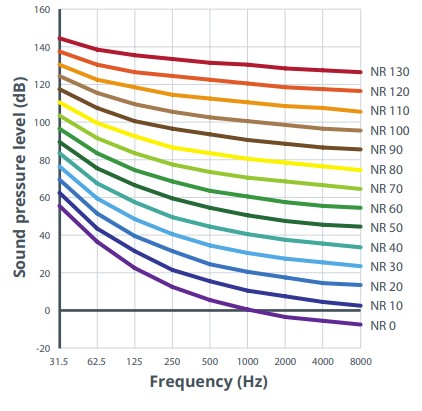
Figure 1. Noise rating curves
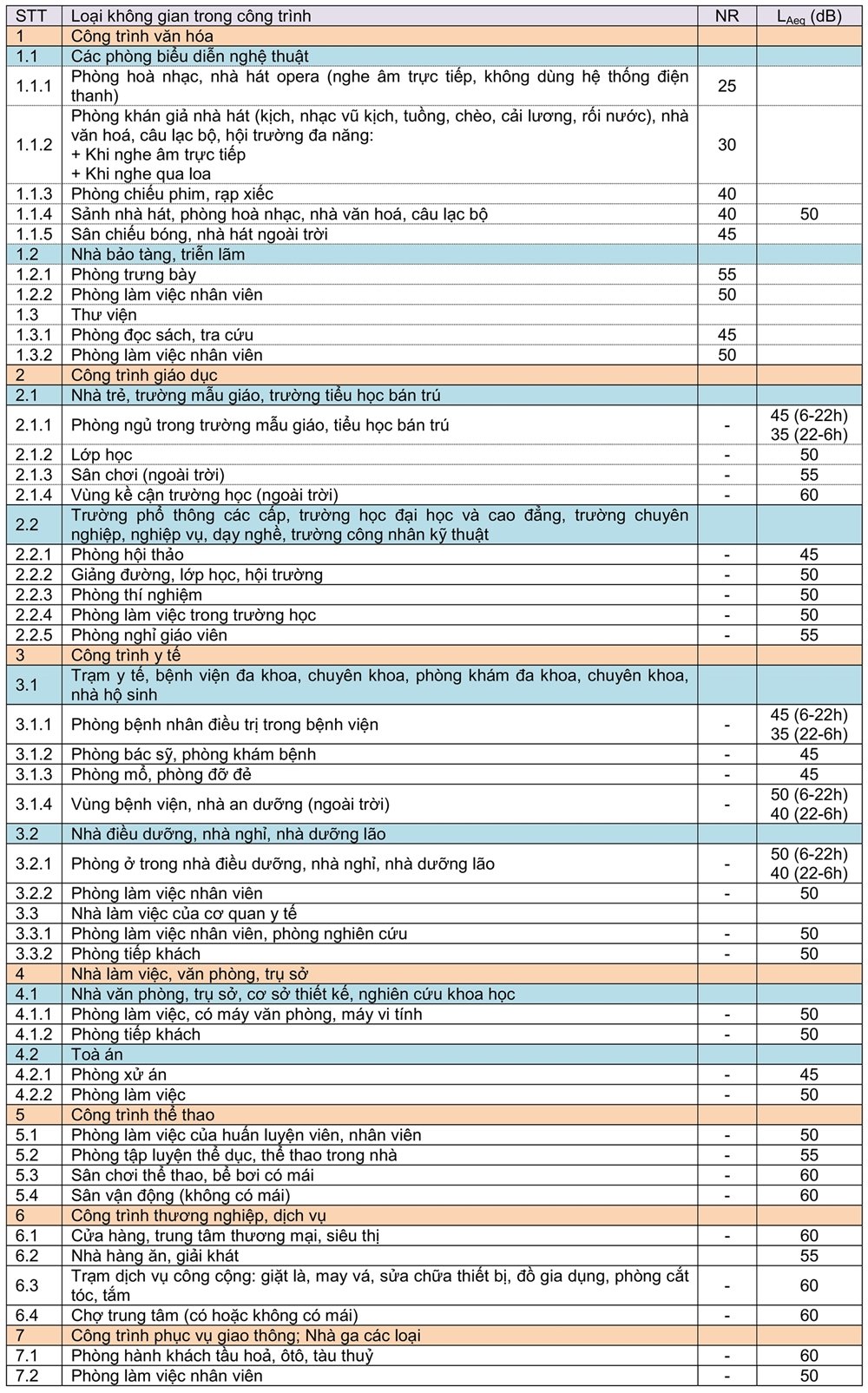
Noise is unwanted sound, and whether indoors, at work or outdoors, we are almost always exposed to a certain level of background or ambient sound. We can never create a completely silent environment, nor would we want to live in a world without sound. A moderate level of background sound can be useful, helping private conversations at home or in the office not to be overheard by nearby listeners while still allowing those talking to hear each other. Very low background sound can help prevent sleep or rest being disturbed by sudden loud noises. In some public places, higher background sound levels may be acceptable, while in others, such as auditoriums and concert halls, very low background levels are essential. Noise Rating (NR) curves are widely used to set permissible sound levels in interior spaces. NR curves define acceptable indoor environments for hearing protection and speech communication. These curves range from NR 0 to NR 130, as shown in Figure 1. Maximum permissible noise levels in public buildings are given in Table 1, and the effects of noise on human activities are summarised in Table 2.
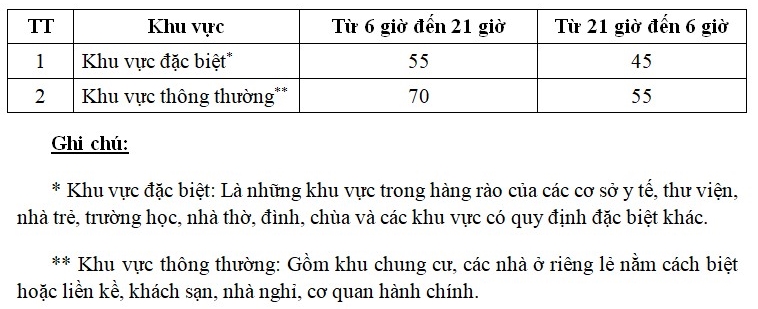
In Vietnam, the maximum noise limits for noise generated by human activities, regardless of source type and location, in areas where people live, operate and work are set out in QCVN 26:2010/BTNMT as follows:
Table 1 – Recommended maximum noise levels by use
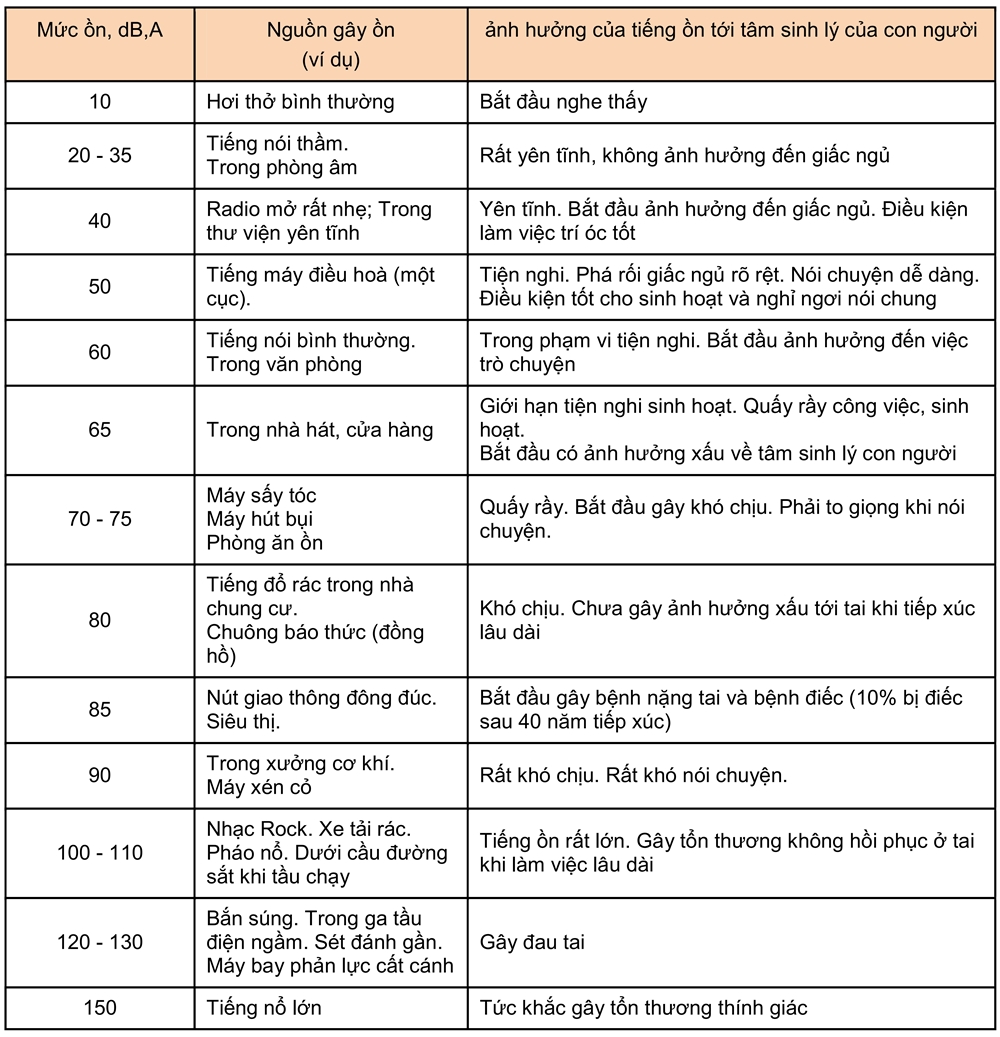
Table 2 – Effects of noise on human activities
Table 3 – Maximum permissible noise limits (LAeq, dB)
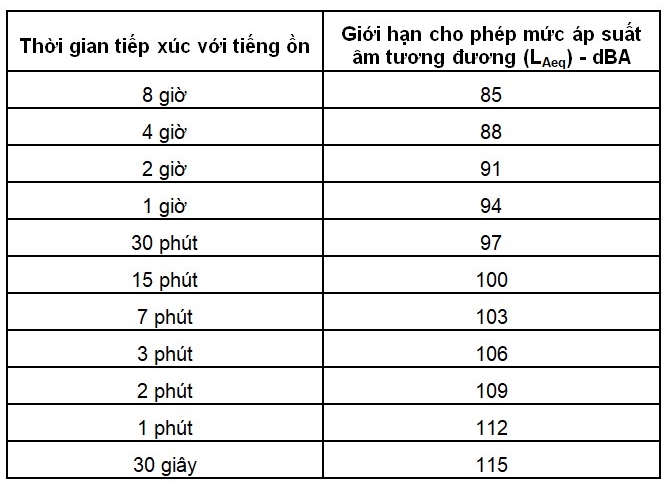
Permissible occupational noise exposure for workers at the workplace must not exceed the values specified in QCVN 24:2016/BYT
Table 4 – Permissible sound pressure levels by exposure time
Today’s most advanced sound level meters and analysers can perform many sound measurements and assessments, but no instrument can yet imitate how the human ear perceives sound. Instruments can therefore only determine sound levels (in dB), that is, a physical value. The main methods for measuring sound are:
- Frequency analysis of sound levels.
- Measurement of the total sound energy level using weightings that approximate the response of the human auditory system.
- Integrating measurements over time intervals to determine the average sound energy (equivalent sound level).
- Recording sound pressure levels (on paper) or recording sound on tape or disk and displaying it.
- Measuring room reverberation time and the sound insulation of building elements.
Today’s sound level meters all work on the principle of sound pressure, like the human ear. There is, however, a fundamental difference between instrument and ear: the microphone is equally sensitive to all frequencies, whereas the ear converts sound pressure into stronger or weaker nerve impulses depending on frequency. The ear is subjective, and the perceived loudness is expressed in phons. To approximately convert objective measurements into the subjective perception of the ear, weighting networks corresponding to the equal-loudness contour closest to the measured level must be built into the instrument. Since this is very complex, the equal-loudness contours are divided into three ranges and an average curve is defined for each.
- Range A: equal-loudness contours from 0 to 40 dB (at 1,000 Hz)
- Range B: 40 to 70 dB (at 1,000 Hz)
- Range C: above 70 dB (at 1,000 Hz)
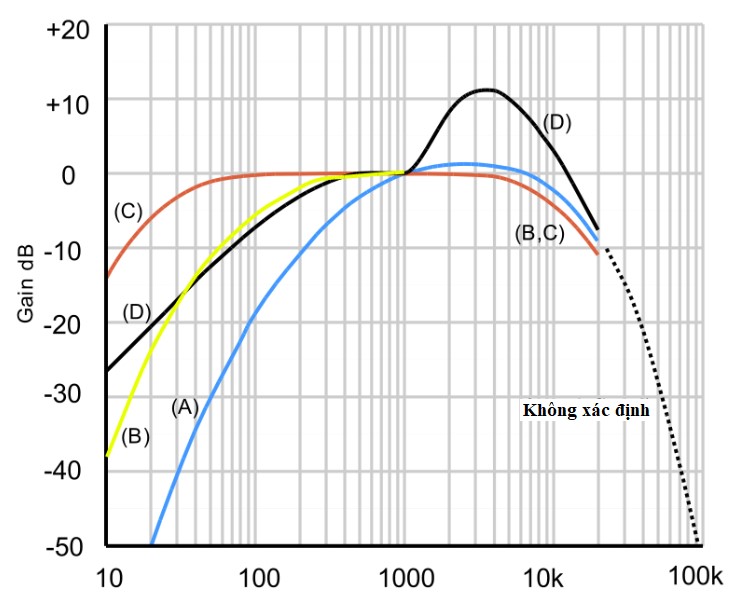
Figure 2. A, B, C and D weighting curves
This gives weighting networks A, B and C, with sound levels expressed in dB(A), dB(B) and dB(C). A D-weighting network (dB(D)) was later added to account for the annoyance of high-frequency noise. To obtain results closest to the perception of the human ear, the measurement procedure is:
- Use A-weighting; if the measured level does not exceed 40 dB, the result is valid and expressed in dB(A).
- If the level exceeds 40 dB, use B-weighting. The valid result lies within 40–70 dB and is expressed in dB(B).
- If the level exceeds 70 dB, measure with C-weighting (dB(C)).
However, this procedure is cumbersome and sometimes impractical. Therefore, A-weighting (dB(A)) is now specified for measuring, assessing and setting standards for all sounds, including everyday life, industrial production, traffic and aircraft noise.
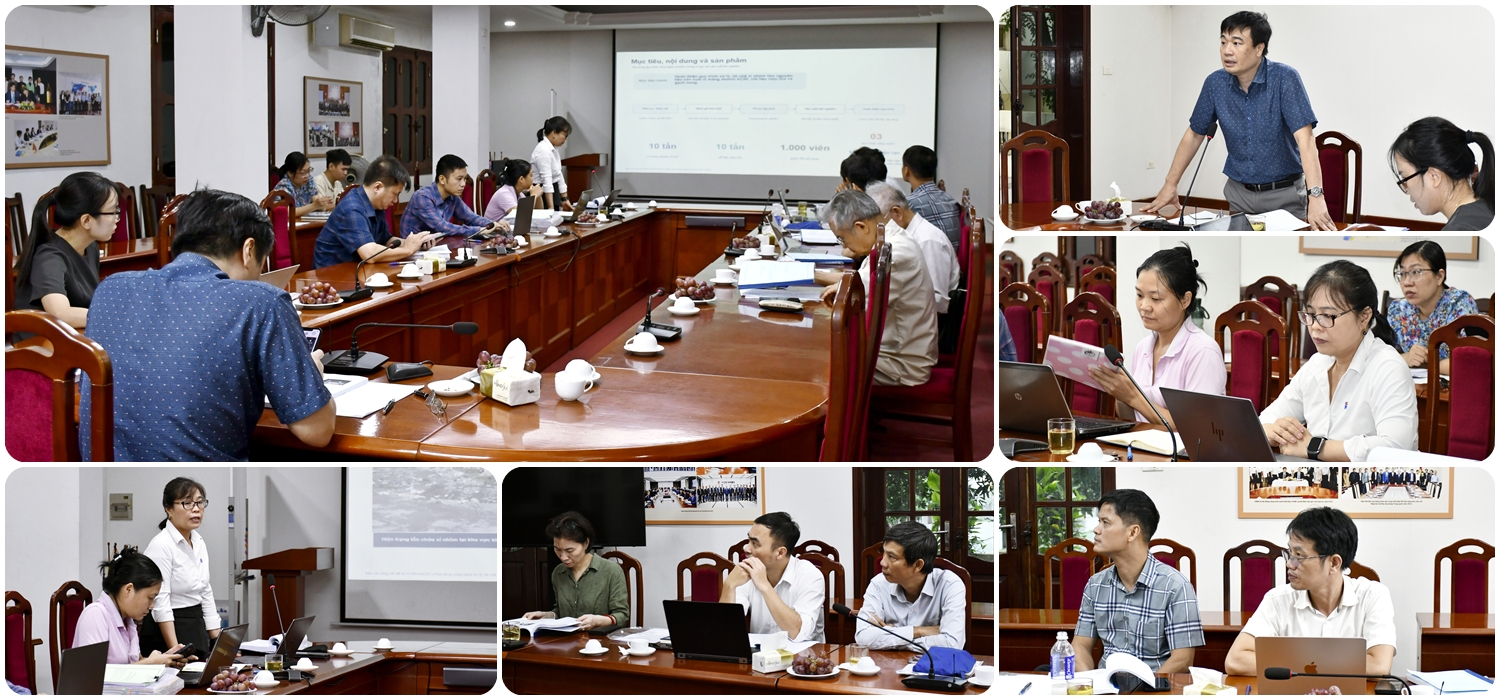
Centre for Environment and Construction Mechanics – VIBM is one of the leading units in research and testing, environmental noise surveys and analysis, building acoustics assessment, simulation of the sound insulation of building elements, and field sound insulation assessment in accordance with national and international standards such as TCVN 7878 (ISO 1996), TCVN 9799 (ISO 9612), TCVN 7192 (ISO 717), ISO 140, ISO 16283, ISO 10140, ASTM E336, ASTM E90, ASTM E413, ASTM E1007, ASTM E492 and ASTM E989.
Contact details
Centre for Environment and Construction Mechanics – VIBM
Address: Lane 235 Nguyen Trai Street – Khuong Dinh – Hanoi, Vietnam
Tel: +84 24 3558 5928; +84 915 502 834; +84 912 181 479; Fax: +84 24 3858 1112;
Email: tbmt.atld@gmail.com
Website: http://vibm.vn
Centre for Equipment, Environment and Occupational Safety