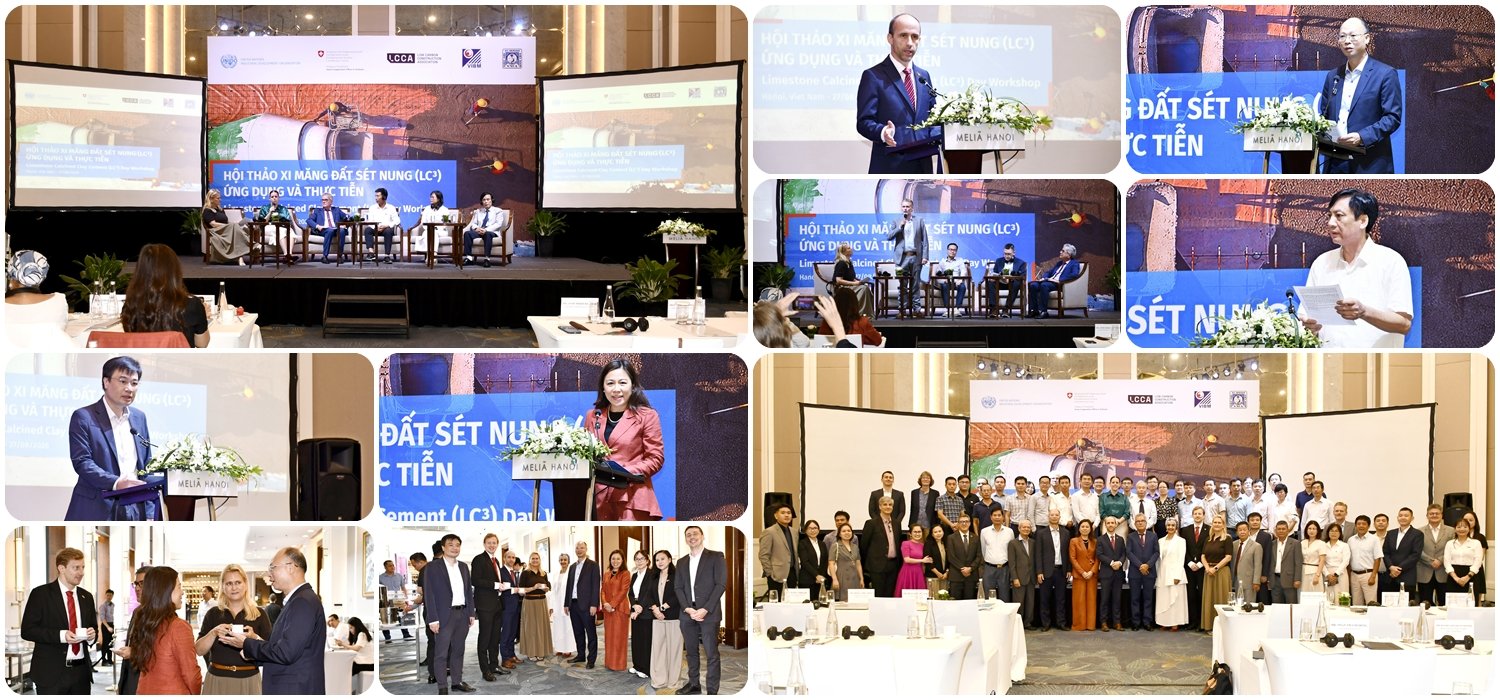
International Workshop “New Building Material Technologies and Solutions for Climate-Adapted Housing in Viet Nam”
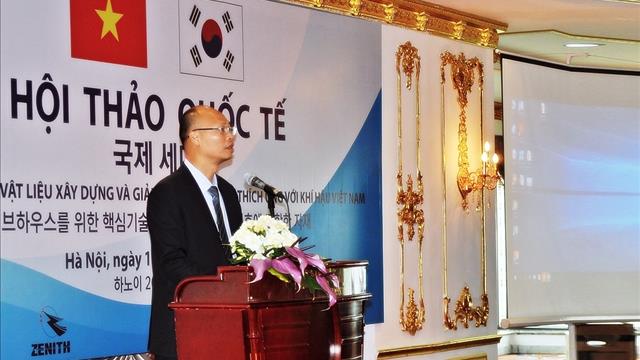
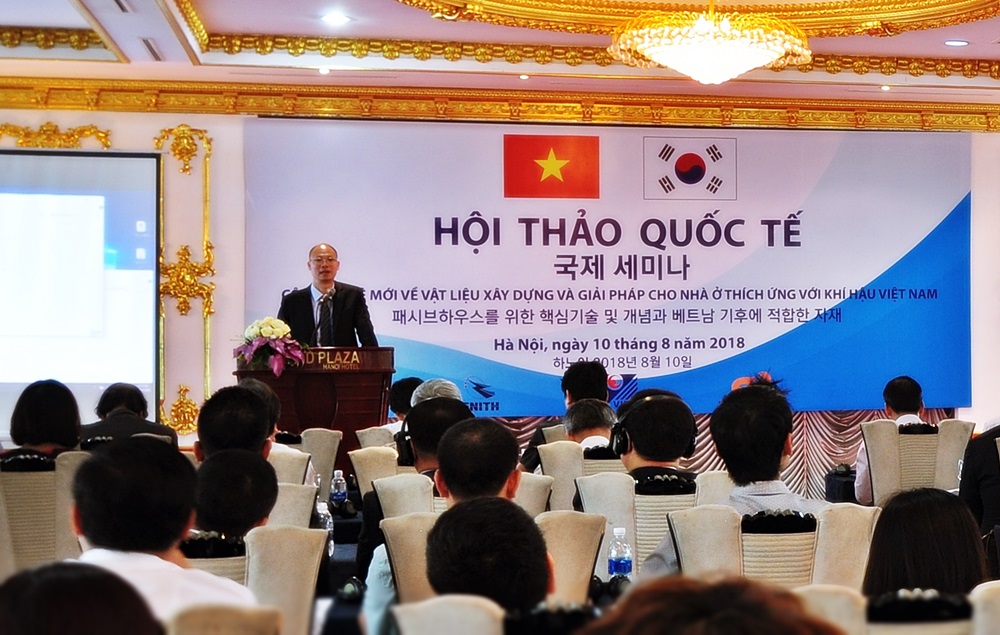
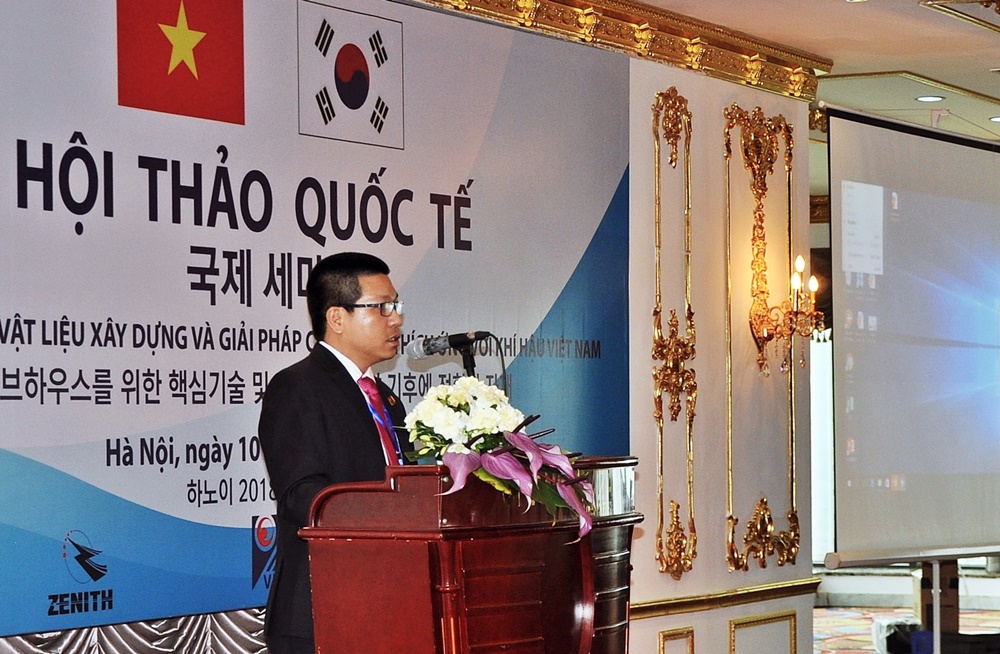
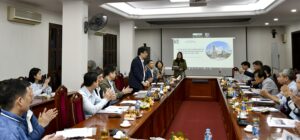
Dr. Le Trung Thanh – Director of VIBM, speaking at the workshop
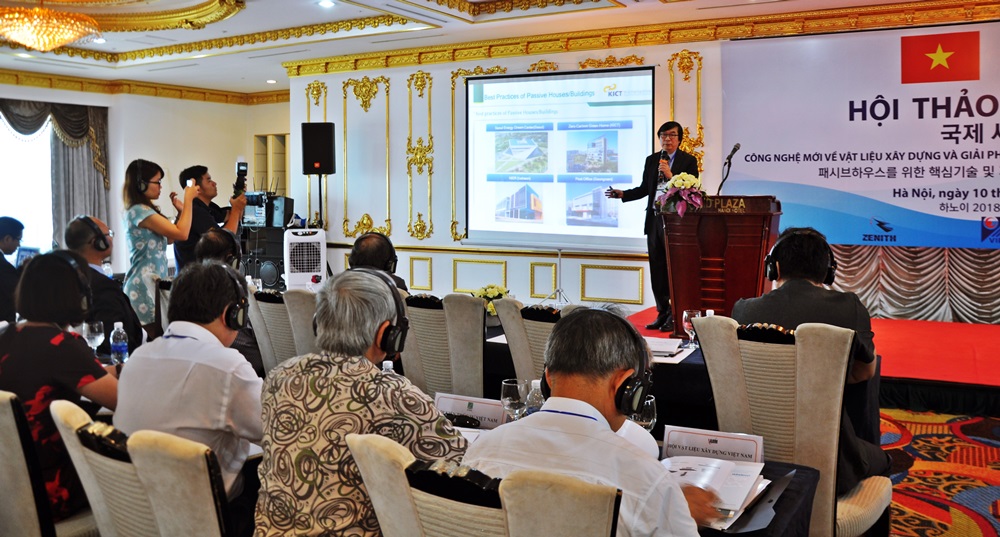
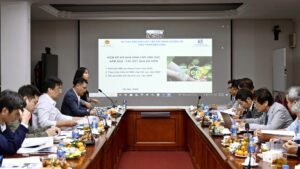
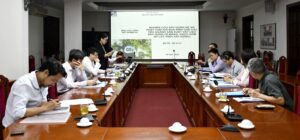
The workshop was attended by representatives of the Ministry of Construction, the Ministry of Science and Technology, the National Council for Science and Technology Policy, the Vietnam Federation of Civil Engineering Associations, the Vietnam Association of Architects, the Vietnam Association of Construction Consultants, the Vietnam Association for Structural Engineering and Construction Technology, the Vietnam Building Materials Association, the Vietnam Association of Construction Contractors, universities, research institutes, real estate investors, consultancy, design, construction, construction inspection and building material manufacturing enterprises from Viet Nam and Korea, as well as press and television reporters.
In the trend towards energy-efficient and environmentally friendly green buildings, the Passive House and its construction techniques are attracting interest and development thanks to the house’s ability to adapt to the climate: it maintains a comfortable indoor temperature without air-conditioning, or can cut the energy used by such equipment by up to 80% at other temperature levels. According to Dr. Le Trung Thanh – Director of VIBM, by 2017 there were an estimated 1,200 Passive House buildings in the USA and up to 40,000 in Europe, while in Korea the number has been rising rapidly in recent years.
Opening the workshop, Dr. Le Trung Thanh introduced the development of building materials in Viet Nam and outlined current opportunities and challenges. The master plan for building materials development in Viet Nam to 2020, with a vision to 2030, is based on stable and sustainable development that ensures economical and efficient use of resources and environmental protection while meeting domestic and export demand. He also reviewed specific data on domestic demand for building materials to 2020 and the development trend of smart, energy-efficient and environmentally friendly building materials to 2030. Leading Southeast Asia in infrastructure investment at about 5.7% of GDP, together with huge housing demand and favourable natural and human resources, Viet Nam has favourable conditions for developing building materials. However, in 2018 the building materials market faced many challenges, such as few new real estate projects, strong competition from imported building materials and stagnating consumption of many essential building materials. Facing these opportunities and challenges, at the end of his speech Dr. Le Trung Thanh proposed specific solutions to further develop Viet Nam’s building materials industry.
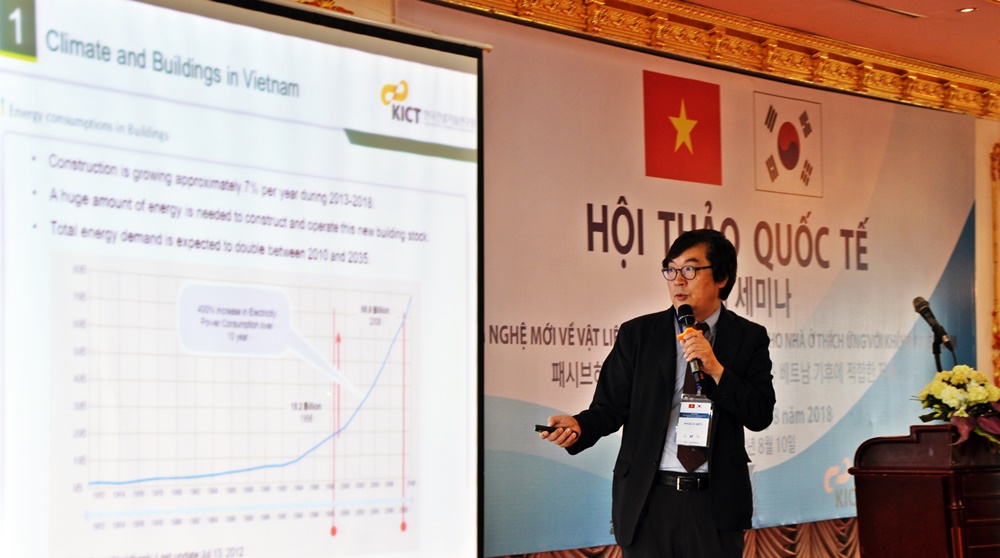
Continuing the presentations, Dr. Dong Woo Cho of KICT presented the standards and core technologies for Passive House buildings and shared experience in building them in Korea. He affirmed that climate always has a huge and complex impact on buildings, especially in Viet Nam, a country with a tropical monsoon climate. The Passive House and its construction techniques are therefore the most effective solution, helping Viet Nam save the energy consumed each year for cooling and dehumidification while being carbon-free and environmentally friendly. To clarify this still-new building technology, Dr. Dong Woo Cho introduced the standards and construction techniques related to building thermal regulation, as well as the basic systems of the house, such as insulation, ventilation with heat recovery and conditioning, building materials, etc., and the techniques for building them. Finally, he presented his important research results for building Passive Houses suited to the climate and environment of Korea and Viet Nam.
In a short presentation on behalf of Zenith International Vietnam Co., Ltd., Mr. Kim Jung Ryool introduced technologies and building materials for houses suited to Viet Nam’s climate. Zenith currently supplies insulated glazing systems and composite wood flooring in the Vietnamese market that are fully suited to Viet Nam’s climate, environmentally friendly and suitable for Passive Houses in Viet Nam.
At the end of the workshop, delegates and speakers held lively discussions on many aspects, including construction costs, standards, construction techniques and other aspects related to the Passive House. The cost of building a Passive House can be 10–15% higher than conventional buildings, so the payback period may be longer. However, a Passive House minimises the cost of cooling and dehumidification equipment while ensuring durability and environmental protection. Korean developers of this technology believe that construction costs will continue to fall as the technology develops and will reach parity with conventional construction in the near future.
The workshop “New building material technologies and solutions for climate-adapted housing in Viet Nam”, co-organised by VIBM, the Korea Institute of Civil Engineering and Building Technology and Zenith International Vietnam, provided much useful information and left a good impression among construction experts from Viet Nam and Korea. It was also an occasion for the parties to seek opportunities for cooperation in research and application of new building materials and solutions for the sustainable development of the construction sectors of both countries.
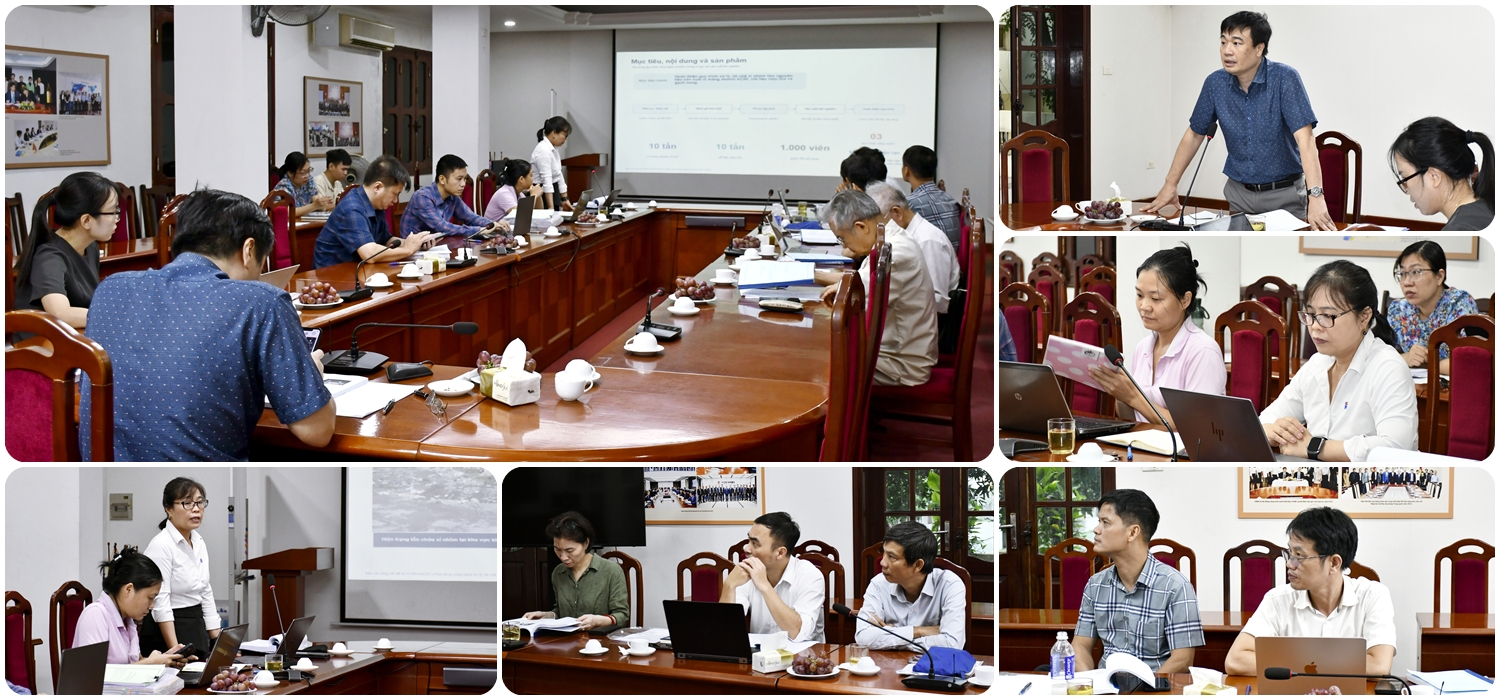
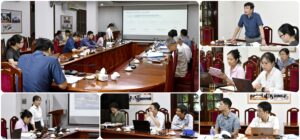
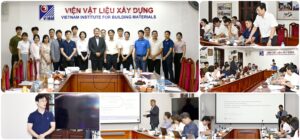
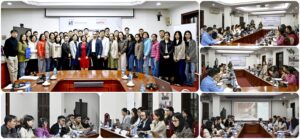
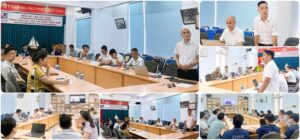
Photos from the workshop: