VIBM: Measuring the Solar Reflectance Index (SRI)
Vietnam’s ongoing urbanisation will inevitably lead to the “urban heat island” effect – the warming of city-centre areas. Combined with the greenhouse effect and the spread of concrete surfaces, the temperature difference between urban centres and suburban areas becomes very large.
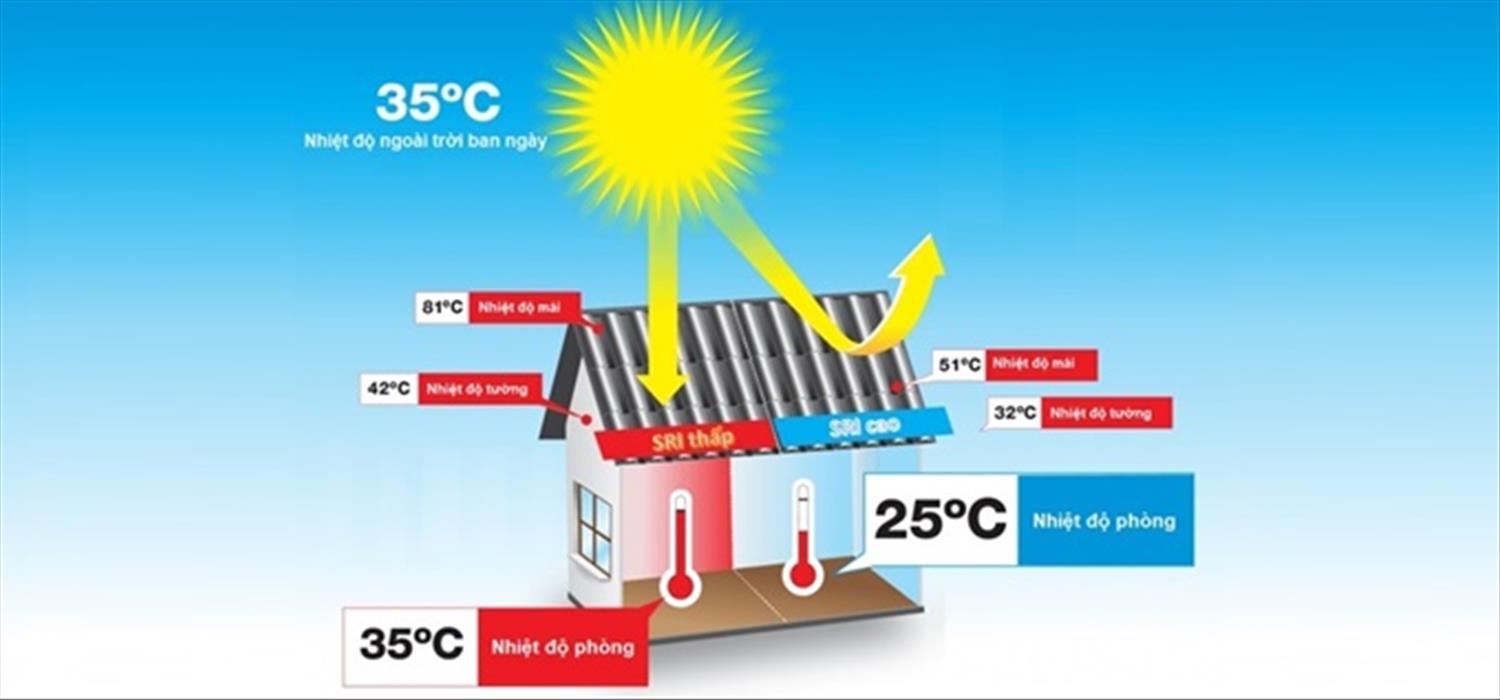
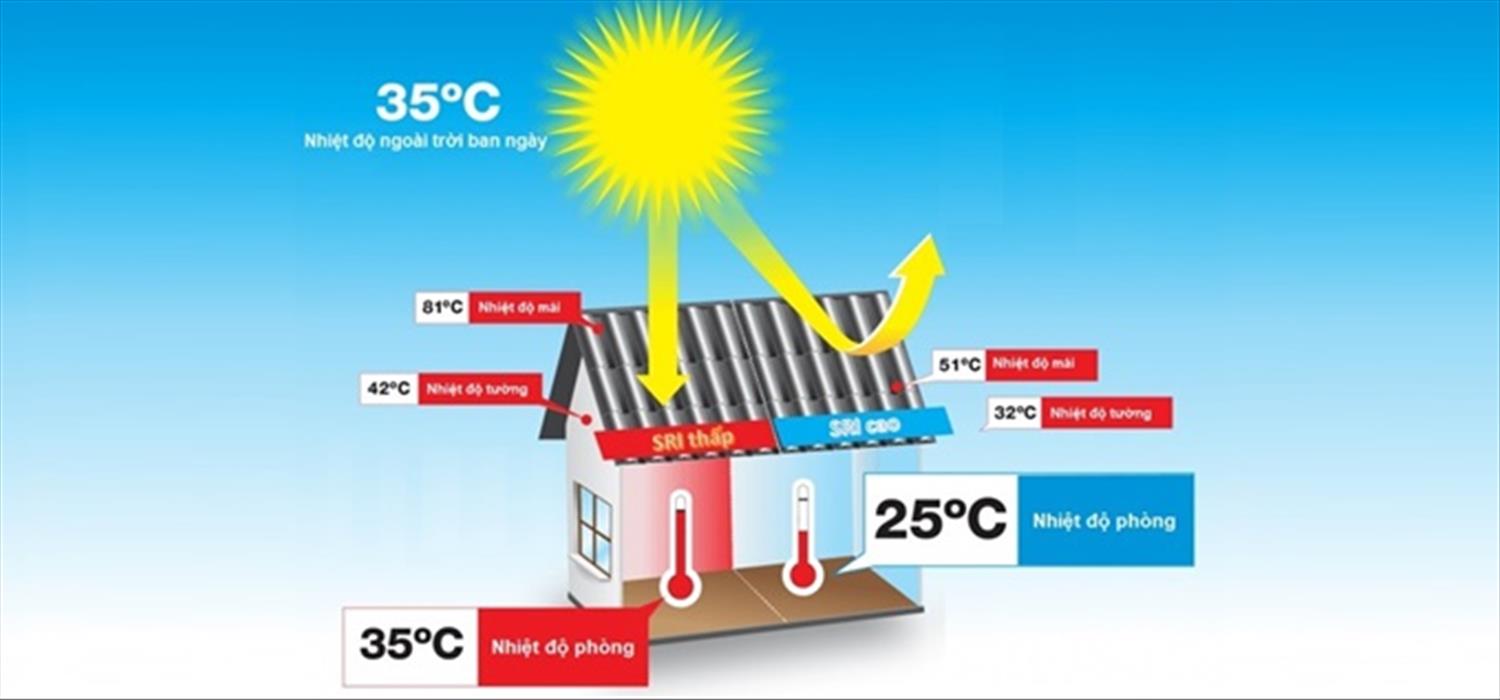
Figure 1: Thermal performance of building envelope materials
The urban heat island effect is mainly related to surface heat islands: during the day, sunlight heats surfaces such as roofs, walls and pavements in the urban core, whereas in rural areas and parks, abundant shade keeps surface temperatures close to air temperature. Driven by solar radiation, the surface urban heat island persists day and night, especially in summer when heat records are repeatedly broken. To counter the negative impacts of this phenomenon while meeting urban development needs, Vietnam’s major cities need to adopt proactive solutions early. One solution widely used worldwide is to design greener urban buildings using materials that reduce the urban heat island effect.
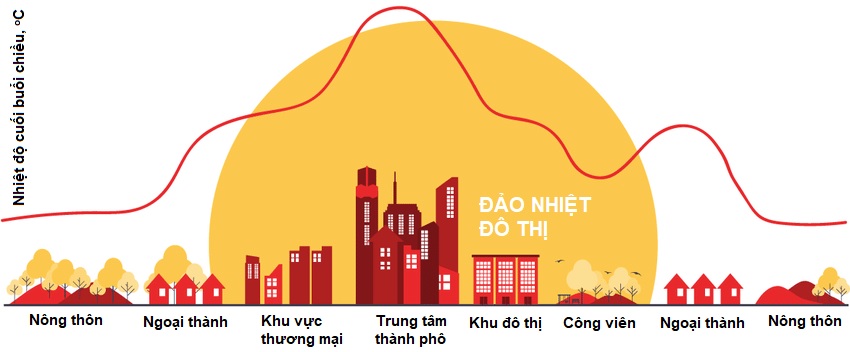
Figure 2: The urban heat island effect
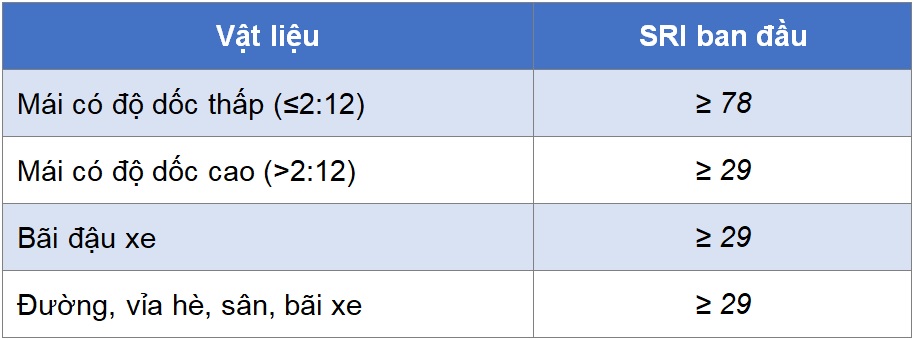
To evaluate the thermal performance of envelope materials such as walls and roofs, the Solar Reflectance Index (Solar Reflectance Index – SRI) or albedo of the material should be measured. The SRI combines a material’s solar reflectance and thermal emittance into a single, easy-to-understand standard metric. It helps designers and users readily select envelope materials with better cooling performance, without having to judge whether a material with high reflectance and low emittance is better or worse than one with medium reflectance and high emittance. The US LEED green building rating system sets minimum SRI values for products and materials used in the envelope of green buildings, as shown in Table 1.
Table 1: SRI requirements in the LEED 2009 green building standard
Vietnam’s LOTUS green building rating system also addresses material SRI in credit LE-4 on reducing the urban heat island effect caused by buildings, as follows:
Table 2 – Requirements in the Vietnamese LOTUS green building rating system

These require building materials to be selected with specific SRI values as follows (Figure 1):
- Use shading structures with a Solar Reflectance Index (SRI) greater than 29, or shading from existing tree canopy, or locate the building in an area planned for tree planting within 10 years (tree shade must cover the roof and paved surfaces);
- Paving materials with an SRI greater than 29;
- Roofing materials with an SRI greater than 78 for low-slope roofs (rise-to-run ratio less than 2:12) and roofing materials with an SRI greater than 29 for steep-slope roofs.
Chỉ số SRI được tính toán bằng công thức rất phức tạp được đưa ra trong các tiêu chuẩn như ASTM E 1980; ISO 22969; EN 17190, và có thang điểm từ 0 đến 100 là thước đo đặc tính nhiệt của vật liệu bao che, hệ số SRI càng cao thì khả năng cản nhiệt càng tốt, vật liệu sẽ được đánh giá càng mát. SRI được xác định bằng cách so sánh nhiệt độ bề mặt vật liệu cần đo so với điều kiện bề vật mặt đen tiêu chuẩn (hệ số phản xạ bức xạ mặt trời SR=0.05; hệ số bức xạ=0.90; chỉ số SRI=0) và bề mặt vật trắng tiêu chuẩn (hệ số phản xạ bức xạ mặt trời SR=0.80; hệ số bức xạ=0.90; chỉ số SRI=100). Một số vật liệu nóng có thể có giá trị âm và một số vật liệu nhiệt dẻo màu trắng và sơn phản xạ nhiệt màu trắng có thể có chỉ số SRI từ 104 đến 110.
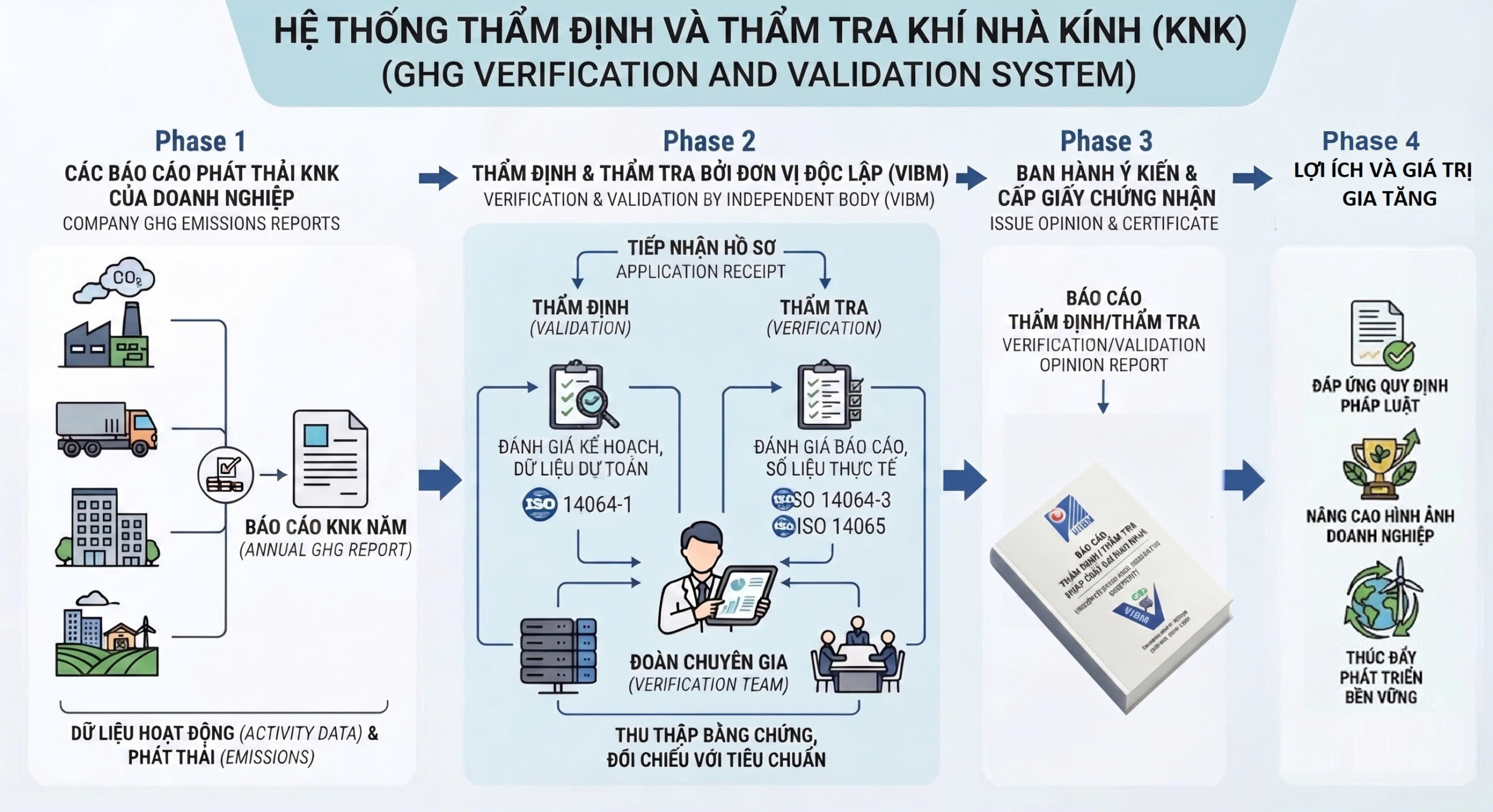
Centre for Environment and Construction Mechanics – Vietnam Institute for Building Materials (VIBM) is one of Vietnam’s leading research units in the field of energy efficiency. The Centre measures, calculates and analyses the thermal properties of materials to meet design standards for green buildings and energy-efficient buildings in compliance with QCVN 09:2017/BXD.